
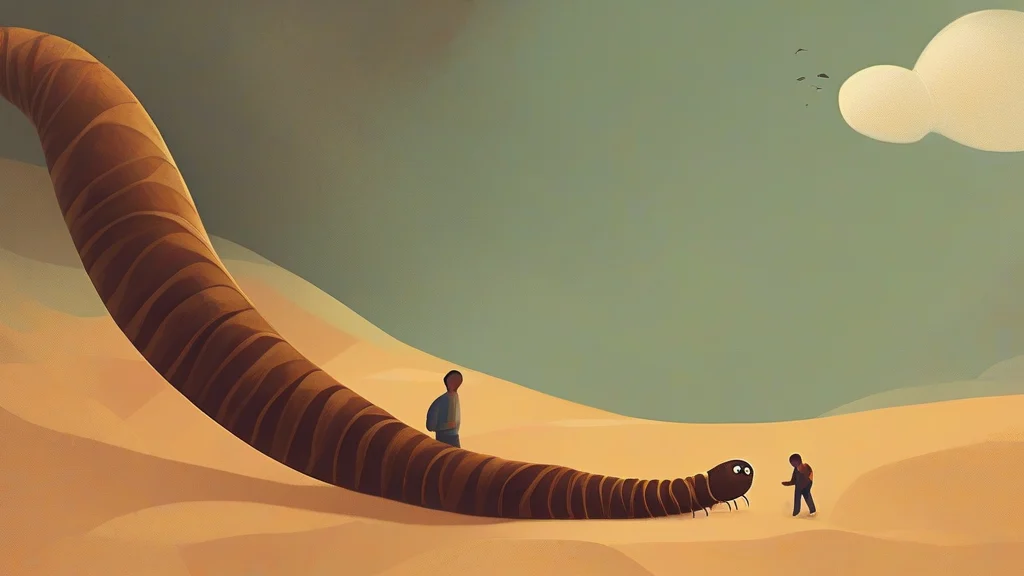
What does inchworm mean?
An inchworm is the caterpillar-like larva of a geometrid moth. It moves by extending its front end, gripping the surface, and then pulling the rest of its body forward, creating the looping gait that gives the insect its common name. Because this movement is slow and awkward, “inchworm” can also describe a person or organization that advances only gradually. The verb “inchworm” is used in the same figurative sense, often when emphasizing that progress is painfully slow but persistent. In everyday language, the word conveys patience and minimal movement rather than merely a lack of speed. It is especially memorable for the contrast between the insect’s tiny body and its remarkably characteristic looping motion, and it remains a useful image for describing gradual change, careful advancement, or a difficult process that cannot be completed in a single leap.
The larva of a geometrid moth, having a slender body and moving in a looping fashion.
"An inchworm was feeding on the edge of the cabbage leaf."
Also used figuratively for a person or thing that progresses very slowly.
To move or advance slowly in small, halting stages.
"The company inchwormed through the approval process."
Figurative and usually somewhat informal or literary.
The regular plural is “inchworms,” used for both the moth larvae and the figurative sense.
"Several inchworms were feeding on the leaves."
An inchworm has no legs in the middle of its body, so it advances by looping its front and rear ends together—one tiny inch at a time.
Reviewed by Deb Chak, Editor. AI-assisted content curated by RJS Tech Solutions LLP.
Where does inchworm come from?
“Inchworm” is an English compound formed from “inch” and “worm,” referring to the larva’s characteristic inching movement. “Inch” comes through Middle English from Old English ince, which was borrowed from Latin uncia, a measure equal to one twelfth of a foot. The compound was used for the moth larva by the early 18th century, while the figurative sense for a very slow-moving person developed later.
Related word forms
How inchworm is actually used
The insect meaning is standard and literal. The figurative noun and the verb are more informal or literary and suggest especially slow, laborious, or halting progress.