
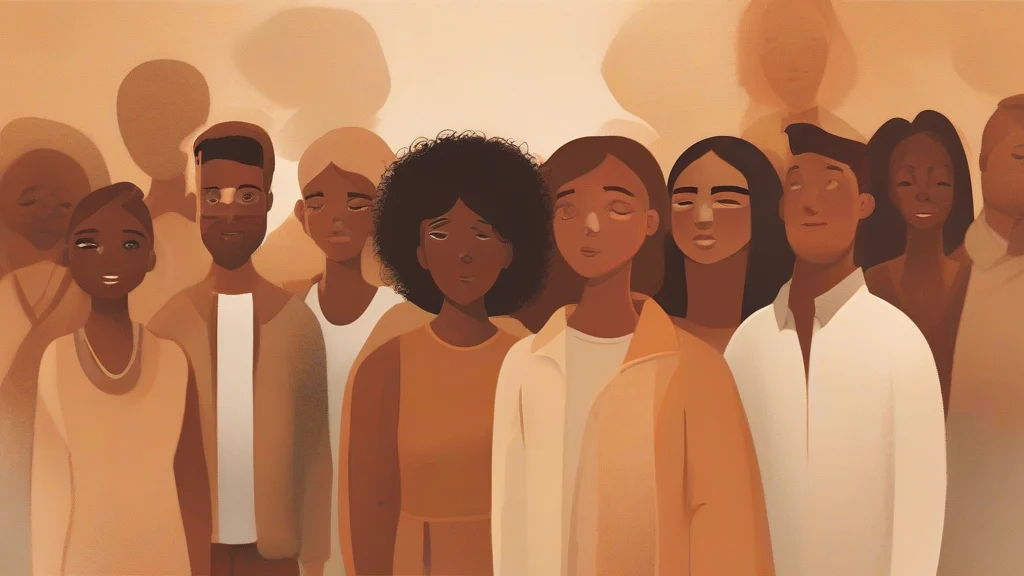
What does inclusivity mean?
Inclusivity is the practice or principle of ensuring that people are not excluded from opportunities, resources, institutions, or conversations because of their identity, background, abilities, or circumstances. It commonly appears in discussions of education, employment, design, public services, culture, and social policy. The word conveys more than simply bringing someone into a group: it suggests providing meaningful access, participation, and recognition while addressing barriers that might otherwise leave certain people at a disadvantage. Inclusivity can describe an approach, a policy, or a desired quality of a community or institution. Its use has become especially prominent in contemporary debates about diversity and equal participation. Although often associated with formal organizational initiatives, the principle also applies informally whenever a group deliberately makes room for people who might otherwise be overlooked or treated as outsiders.
nounThe practice or policy of including people who might otherwise be marginalized, excluded, or treated as outsiders, ensuring that they have equal access and a meaningful voice.
- The quality or practice of including all people, especially those who have historically been marginalized, and of ensuring their participation, access, and representation.
"The committee emphasized inclusivity when revising its hiring and accessibility policies."
"The training program promotes inclusivity by helping staff communicate respectfully across cultural differences."
"Community consultation was central to the inclusiveness of the project."
The plural is uncommon; singular usage is normally preferred.
"The conference explored different forms of inclusivity in public life."
Inclusivity turns the word “include” into a promise: no one should be left outside.
Reviewed by Deb Chak, Editor. AI-assisted content curated by RJS Tech Solutions LLP.
Where does inclusivity come from?
The noun derives from the adjective inclusive, which in turn comes from include. The Latin source includere was formed from in-, meaning “into” or “in,” and claudere, meaning “close,” giving the word a history of closing something in and thus bringing it within a group or boundary. Enclose and enclosure belong to the same wider Latin root, while inclusion is a direct relative of the modern word. The modern noun sense associated with equal participation and representation developed from this established word family.
Related word forms
How inclusivity is actually used
The term is widely used in social, educational, workplace, and institutional contexts. It is generally neutral and positive, though some speakers regard it as an institutional slogan unless its practical effects are explained.
Easily confused with inclusivity
Inclusivity emphasizes participation, access, and belonging, whereas exclusivity emphasizes exclusion, restriction, or privileged access.