
What does indigenous mean?
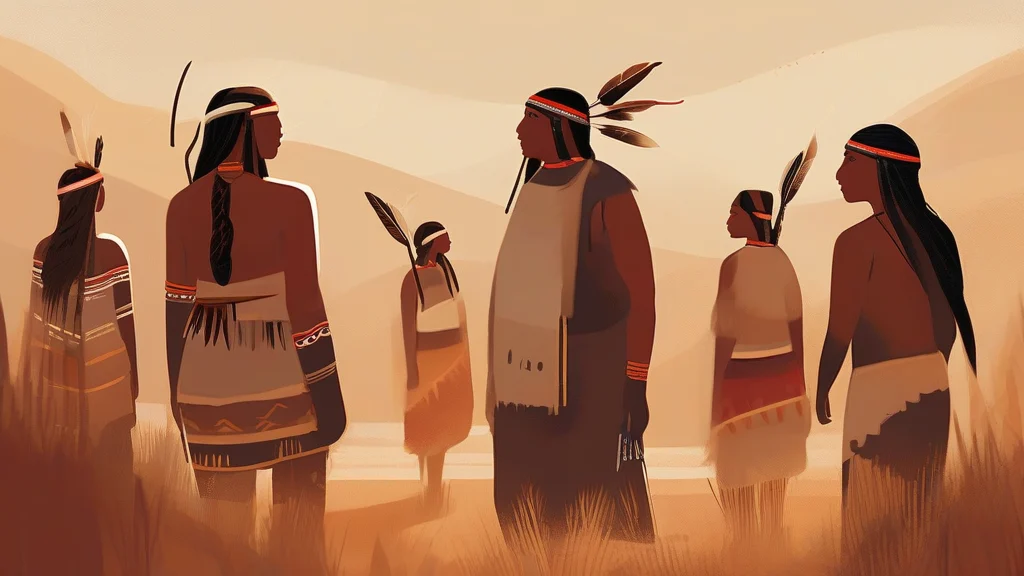
Indigenous means naturally originating in a particular place rather than having been brought there from elsewhere. The word is widely used in ecology for plants, animals, and other organisms native to a region, and it is also central to historical and political language about peoples whose languages, cultures, and communities developed in a place before European colonization or other outside intervention. In this second use, “Indigenous peoples” commonly includes communities recognized by law, history, or cultural tradition as having an enduring relationship with their ancestral lands. Although the adjective can sometimes overlap with “native” and “aboriginal,” its political use has become especially prominent in debates about land rights, cultural preservation, education, and self-determination. Applied to a species, “indigenous” simply means that the species naturally occurs in the area concerned.
adjectiveExisting naturally in a particular place or region rather than having been introduced from elsewhere. It can also refer to people who are native to a place, especially in relation to their historical presence, languages, cultures, and rights.
- Originating naturally in a particular place or region rather than having been introduced from elsewhere.
- Belonging to or concerning a people whose presence in a place is understood as preceding colonial settlement or outside control.
"The valley supports several indigenous species of orchid."
"The park is home to indigenous plants that cannot survive in the neighboring farmland."
"Indigenous communities consulted the government about the proposed development."
Indigenous comes from Latin for “born within,” a fitting reminder that the word asks what naturally belongs to a place.
Reviewed by Deb Chak, Editor. AI-assisted content curated by RJS Tech Solutions LLP.
Where does indigenous come from?
The word comes through French from Latin “indigenus,” meaning “native” or “born in,” ultimately associated with “indigena,” a native inhabitant. It entered English in the early 17th century in senses referring both to people native to a country and to things naturally found there. Later, the adjective became especially prominent in colonial, legal, and political contexts concerning Indigenous peoples.
Related word forms
How indigenous is actually used
The adjective is used globally, but its historical and political meaning is especially prominent in discussions of Indigenous peoples and their rights. Capitalization varies by context and publication style. In biological usage, it contrasts with introduced, non-native, or alien organisms.
Easily confused with indigenous
Both can mean native to a place, but “aboriginal” is now chiefly associated with Aboriginal peoples and cultures in Australia, whereas “indigenous” has a much wider geographical and political application.
“Native” can describe either a person or an organism originating in a place, while “indigenous” is especially common in ecological, historical, and political discussions concerning peoples, languages, cultures, and rights.