What does ingle mean?
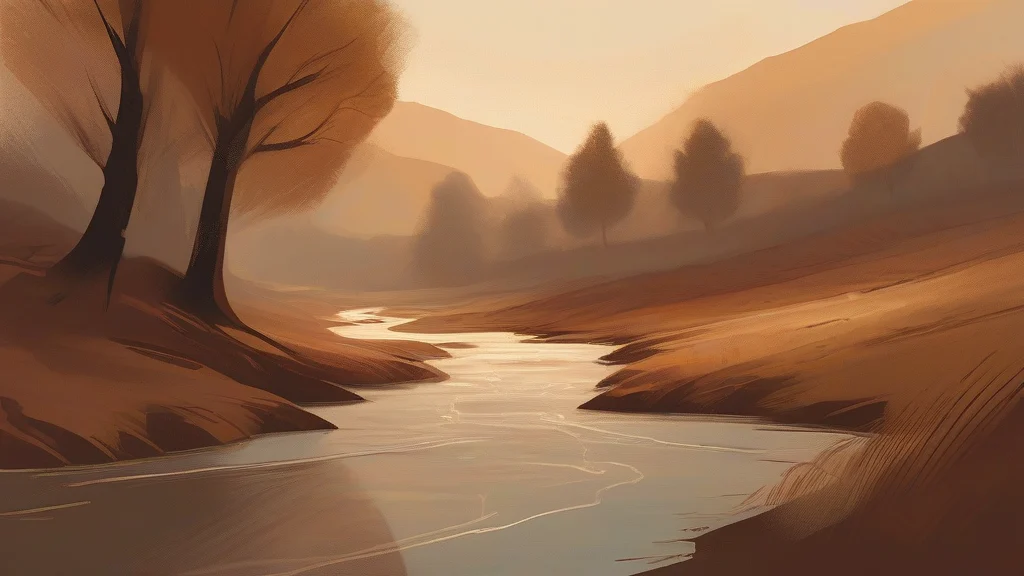
The term ingle refers to a small stream or brook, typically flowing through a valley or low-lying area. It is a word commonly used in Scotland and Northern England, and is often associated with rural or natural environments. Ingle is a useful word for describing small watercourses that are smaller than rivers but larger than mere trickles. The word has a soothing connotation, evoking images of gentle flowing water and peaceful landscapes. Understanding the meaning of ingle can help to enrich one's vocabulary and appreciation of natural scenery.
nounA narrow stream or brook, often flowing through a valley or low-lying area.
- A small stream or brook
- A narrow valley or low-lying area through which a stream flows
"The ingle flowed gently through the valley, providing a soothing background noise."
"The ingle was home to a variety of aquatic plants and animals."
"The villagers built their homes alongside the ingle to be close to the water source."
The plural form is used when referring to multiple small streams or brooks.
"The countryside was dotted with small ingles and brooks."
Reviewed by Deb Chak, Editor. AI-assisted content curated by RJS Tech Solutions LLP.
Etymology of ingle
The word ingle is of Old English origin, derived from the word 'ingle' or 'ingul', which referred to a narrow stream or valley. It is related to the Old Norse word 'ingi', meaning 'meadow' or 'valley'. Over time, the word ingle has been used in Scotland and Northern England to describe small streams and brooks.
How ingle is actually used
This word is primarily used in Scotland and Northern England, and is often associated with rural or natural environments.