
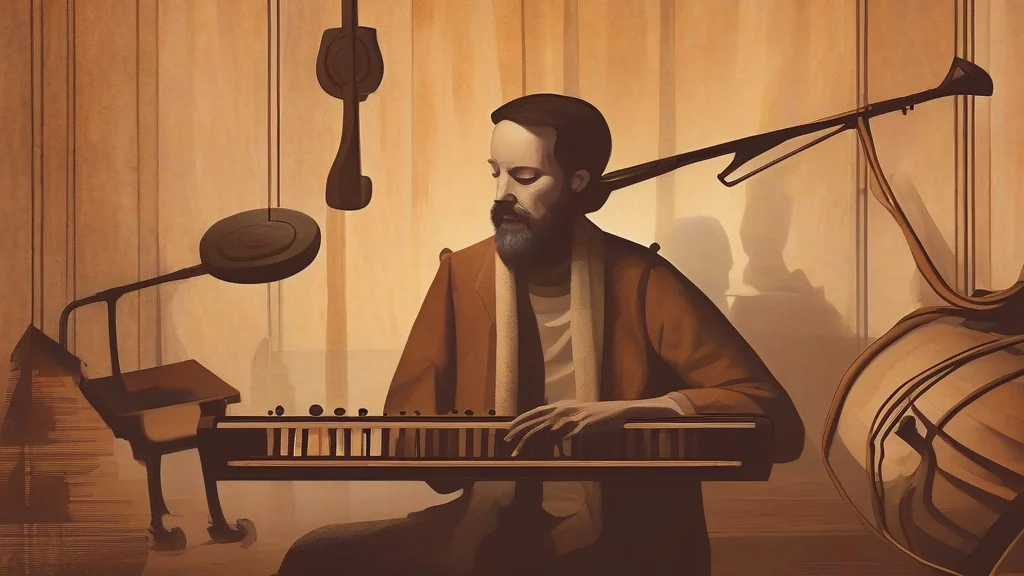
What does instrumentalism mean?
Instrumentalism is the view that art, music, literature, and similar cultural activities are valuable chiefly because they help accomplish purposes outside themselves. Such purposes might include educating an audience, reinforcing moral values, promoting social change, or influencing political opinion. In aesthetic debate, instrumentalism contrasts with formalism, which gives priority to an artwork's internal structure and intrinsic qualities. The term can therefore carry a critical implication: treating culture simply as a tool may overlook artistic value that cannot be reduced to usefulness. Instrumentalism is mainly used in philosophy, literary theory, cultural studies, and education. Although the word can describe a general emphasis on practical function, its established use is especially associated with debates about whether art should be judged by its effects and purposes rather than by its artistic character.
nounInstrumentalism is the view that art, music, or another cultural activity is valuable chiefly as a means of achieving purposes outside itself, such as moral instruction, social change, education, or political influence. In discussions of aesthetics, it contrasts with the idea that art has value primarily through its intrinsic artistic qualities.
- The view that art, music, literature, or other cultural activities are chiefly valuable as instruments for achieving non-artistic purposes such as education, morality, social reform, or political persuasion.
- More broadly, the interpretation of cultural works or practices primarily in terms of the functions they serve or the effects they produce.
"The debate over instrumentalism raised questions about whether a work of art should be judged by its beauty or by its social usefulness."
"Critics described the government's cultural policy as a form of instrumentalism because it valued art chiefly for its economic and political effects."
"Her essay rejects the instrumentalist claim that poetry is valuable only when it teaches a practical lesson."
The plural is rare and is used when referring to different versions or applications of the doctrine.
"The authors compare several historical instrumentalisms and their treatment of artistic autonomy."
Instrumentalism asks a pointed question about art: is a work valuable because of what it is, or because of what it can do?
Reviewed by Deb Chak, Editor. AI-assisted content curated by RJS Tech Solutions LLP.
Etymology of instrumentalism
The word is formed from instrumental plus the suffix -ism, a combination meaning a principle, practice, or doctrine. Instrumental ultimately comes through Latin instrumentalis, derived from instrumentum, meaning “instrument” or “tool.” The resulting term was applied in the arts and humanities to the view that cultural work functions as an instrument for purposes beyond itself.
How instrumentalism is actually used
The term is primarily intellectual and analytical rather than everyday. It is most common in aesthetics, literary theory, cultural studies, and education; when used in the visual arts, it may specifically refer to treating art as a tool for moral, political, or social purposes.
Easily confused with instrumentalism
Instrumentalism is the doctrine or viewpoint that art or music should serve purposes beyond itself, whereas instrumentalism can also be used as a broader historical label for practices and techniques based on musical instruments.
Formalism treats the formal features and structure of a work as central to its value, while instrumentalism treats the work chiefly as a means to an external end.