
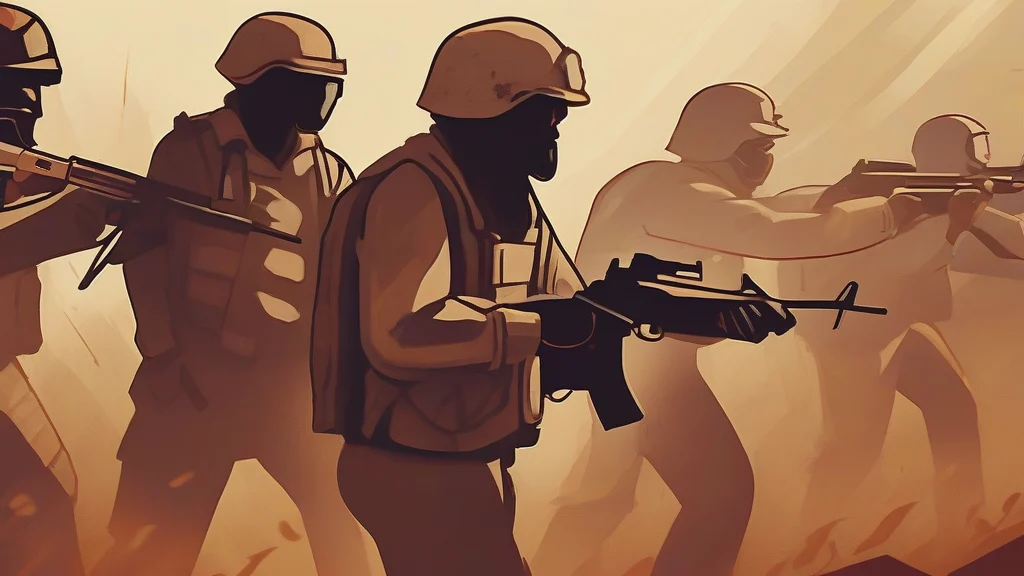
What does insurgency mean?
An insurgency is an organized armed rebellion against a government, occupying force, or other authority, typically conducted within a state or territory. The term is especially common in political reporting, military analysis, and historical writing, where it conveys the persistence and organization of resistance rather than a single act of protest. An insurgency may involve guerrilla warfare, terrorism, political subversion, or a combination of these methods, but the designation does not by itself establish the legitimacy or military effectiveness of the rebels. In international relations, the related term “counterinsurgency” denotes the political, military, and strategic measures taken against an insurgency. Although “insurgency” and “insurrection” overlap, the former usually gives greater emphasis to sustained armed campaign, while the latter can also describe a more general revolt against authority.
nounAn armed rebellion or sustained campaign against a government, occupying power, or other authority. It usually refers to organized resistance by forces operating within a state or territory.
- An organized armed rebellion against a government, occupying power, or other controlling authority.
"The government responded to the growing insurgency with additional troops and a new security strategy."
"Local officials reported that the insurgency was spreading into several rural districts."
"Her account of the insurgency combines historical analysis with testimony from civilians."
The usual plural form is “insurgencies,” referring to separate armed rebellions or campaigns.
"The region has experienced several insurgencies over the past decade."
Insurgency takes its name from the Latin insurgere, meaning “to rise up”—a rebellion in both word and deed.
Reviewed by Deb Chak, Editor. AI-assisted content curated by RJS Tech Solutions LLP.
Where does insurgency come from?
The word was formed in English during the 17th century from Latin insurgere, meaning “to rise against” or “to rise up.” Its development is closely connected to insurgent, referring to someone who rises in armed revolt. Related English words include insurrection, surge, and resurgent, all of which reflect the Latin root surgere, “to rise.”
How insurgency is actually used
The term is especially common in political, military, and news reporting. It is broadly synonymous with “rebellion” but usually emphasizes organized armed resistance; “insurrection” may cover both armed and non-armed rebellion.
Easily confused with insurgency
An insurgency is an armed rebellion against an authority or occupying power, while insurrection is the broader act of rising in revolt and may include non-armed resistance.