
What does intermarrying mean?
Intermarrying means marrying outside one’s own social, ethnic, religious, or other group. It is the present participle of intermarry and is often used in a noun-like way, especially when describing relationships between communities or populations. The word can be neutral and historical, as in a discussion of how different groups gradually became connected through marriage, but it may also carry social or historical connotations when intermarriage was discouraged, regulated, or associated with the weakening of cultural boundaries. The related noun intermarriage names the practice itself. Intermarrying is more specific than simply mixing or associating with other people: it specifically identifies marriage as the means of crossing group boundaries. Its related antonyms, endogamy and inbreeding, concern marriage or reproduction within a group rather than across groups.
verbTo marry someone from a different social, ethnic, religious, or other group rather than within one’s own group.
- To marry someone from outside one’s own social, ethnic, religious, or other group.
"The community has a long history of intermarrying with neighbouring families."
"The two communities have intermarried for generations."
"The novel explores the difficulties of intermarrying across religious boundaries."
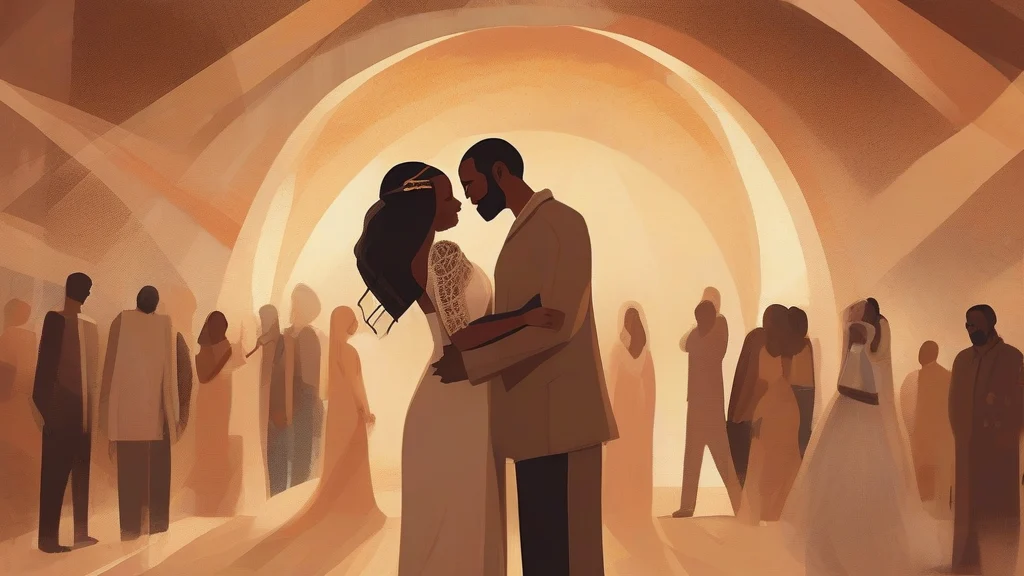
A wedding can connect two families—or, historically, bridge a social divide.
Reviewed by Deb Chak, Editor. AI-assisted content curated by RJS Tech Solutions LLP.
Where does intermarrying come from?
The word combines the Latin prefix inter-, meaning “between” or “among,” with marry, which comes through Old French from Latin roots associated with marriage. In the modern form, the prefix clarifies the unusual sense of marrying outside one’s own social or hereditary group. Its relatives marriage and marital continue to reflect the same central idea of marital union, while intermarriage and intermarry apply the idea specifically to unions across group boundaries.
Related word forms
How intermarrying is actually used
This is the present participle of intermarry and is commonly used in noun-like constructions such as “the intermarrying of two communities.” The term is often historical, sociological, or genealogical in tone.
Easily confused with intermarrying
Intermarrying refers to marriage across group boundaries, whereas endogamy refers to the custom of marrying only within a particular group.
Intermarrying can involve any two distinct social groups, while inbreeding specifically means reproducing or mating within a closely related family or population.