
What does interruptor mean?
An interruptor is a rare noun meaning someone or something that interrupts. Its most straightforward sense is a person who intrudes on speech or conversation, though the word can also refer to a device that interrupts an electrical circuit. The form is unusual today: “interrupter” is the standard spelling in most modern English. Nevertheless, “interruptor” has appeared in formal, older, and technical contexts, often giving the idea of interruption a more formal or mechanical quality. In conversation, using it for a person may sound deliberately old-fashioned, while the technical sense belongs mainly to specialized or historical descriptions of electrical equipment. The word is consequently more noticeable than a completely ordinary noun, and writers normally choose the familiar “interrupter” unless the older spelling has a specific stylistic or historical purpose.
nounA person or thing that interrupts, especially a person who interrupts others or a device used to interrupt an electrical circuit. The word is a rare alternative spelling of “interrupter.”
- A person who interrupts others or a conversation.
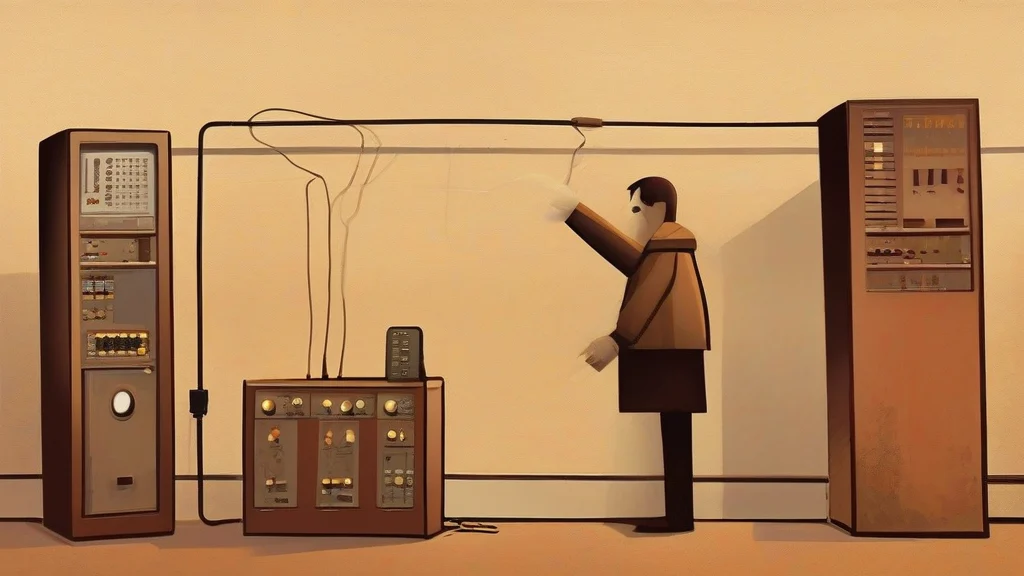
- A device or apparatus that interrupts an electrical circuit.
"The officer was reduced to being a brief, unwelcome interruptor of the discussion."
"Several people objected to being treated as an annoying interruptor of the performance."
"The old circuit interruptor was designed to stop the current before it could cause damage."
The plural is rare, as the headword itself is uncommon in modern usage.
"The technicians replaced the two electrical interruptors."
A once-ordinary agent noun, “interruptor” survives chiefly where old-fashioned diction still gives interruption an almost physical presence.
Reviewed by Deb Chak, Editor. AI-assisted content curated by RJS Tech Solutions LLP.
Where does interruptor come from?
The word belongs to the Latin-derived vocabulary of interruption, based on the Latin prefix inter-, meaning “between” or “among,” and the root rumpere, meaning “to break.” Its formation parallels the more familiar English noun “interrupter,” with “-or” indicating an agent or instrument. The spelling is an older variant that survives in some British and specialized usage, whereas “interrupter” became the usual modern form.
How interruptor is actually used
This is a rare spelling and should generally be replaced with “interrupter” in contemporary English. It may sound formal, archaic, or technical depending on context.
Easily confused with interruptor
“Interrupter” is the standard modern spelling, while “interruptor” is a rare variant used especially in older or more specialized writing.