
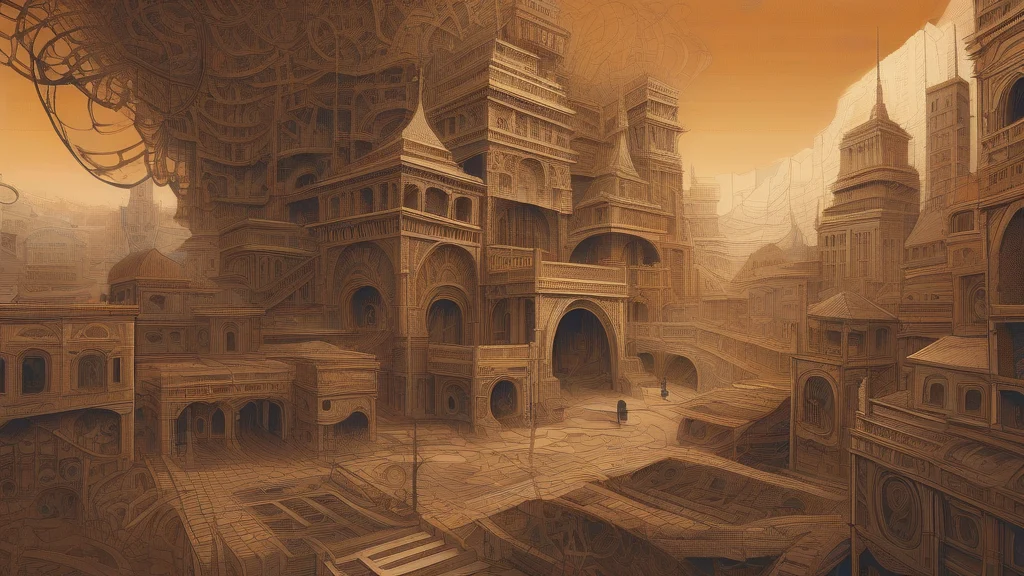
What does intricate mean?
Intricate describes something composed of many interconnected parts, details, or steps in a complex arrangement. It is especially useful for designs, patterns, mechanisms, and processes, where elaborate detail or difficult organisation is central to the description. The word can also suggest that understanding or manipulating something requires care: an intricate problem is not merely large but full of complications that resist easy analysis. In everyday use, “complex” is often a simpler alternative, while “intricate” carries a stronger emphasis on detail, craftsmanship, or intricacy. Intricate is not synonymous with merely difficult; a difficult task may be obscure or demanding without having a complicated structure. Its associations with precision and elaborate design make it useful in formal writing, art and craft descriptions, technology, and discussions of systems and processes.
adjectiveComposed of many small parts or details arranged in a complex or elaborate way. Involving difficult, intricate, or carefully detailed work.
- Consisting of many connected parts, details, or steps, especially in a complicated or elaborate arrangement.
- Involving intricate work; requiring careful attention to detail.
- Hard to understand or analyse because of its complexity.
"The intricate design of the old clock rewarded close examination."
"The mechanism contained an intricate network of gears and springs."
"The negotiation was an intricate process involving several departments and jurisdictions."
"She studied the intricate patterns visible in the manuscript."
The word intricate carries its complexity all the way back to Latin: its root means “entangled.”
Reviewed by Deb Chak, Editor. AI-assisted content curated by RJS Tech Solutions LLP.
Where does intricate come from?
Intricate comes from Latin intricatus, a past participle of intricare, meaning “to entangle” or “involve in difficulty.” The word entered English in the early 17th century with the sense “entangled or complicated,” and its meaning developed to include elaborate detail and careful construction. Its Latin relatives include intricacy and intricately, while the related English verb extricate preserves the idea of freeing something from entanglement.
Related word forms
How intricate is actually used
Intricate is formal and descriptive. It is often used for designs, processes, details, and arrangements that combine many parts or require careful analysis.
Easily confused with intricate
Intricate is the standard adjective describing something complex or detailed, while intricated is uncommon and is not normally used as a dictionary adjective.
Intricate describes something elaborate or complex, whereas extricate means to free someone or something from a difficult situation.