
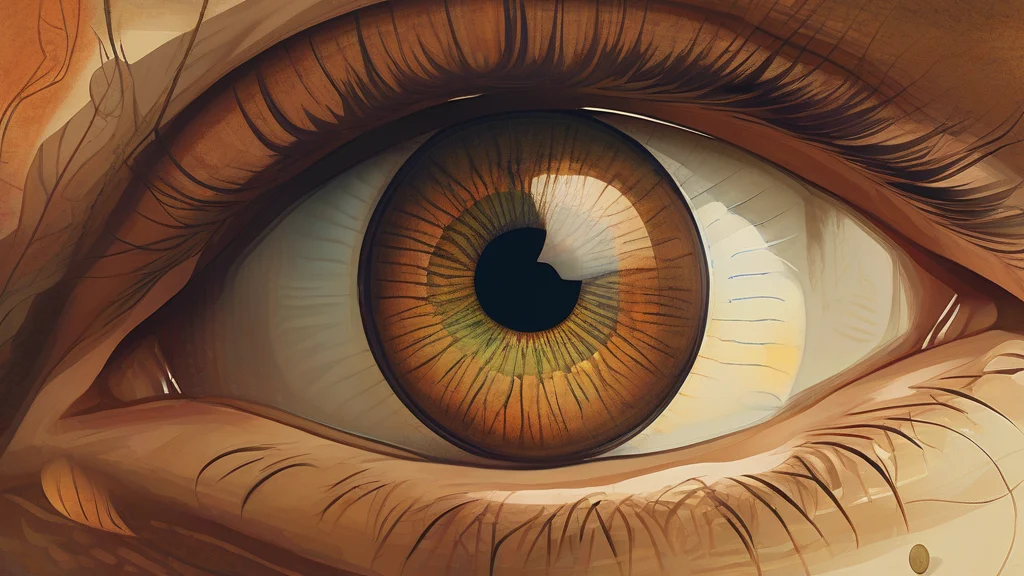
What does iridology mean?
Iridology is the practice of trying to determine a person's health or diagnose disease by examining the color, pattern, and markings of the iris. Proponents claim that changes in the eye reveal information about the condition of the body as a whole. Medical research has not substantiated these claims, and major health authorities do not recognize iridology as a reliable diagnostic method. The term is most often encountered in discussions of pseudoscience, the history of medicine, and popular beliefs about reading character or health from the eyes. It should not be confused with ophthalmology, the medical speciality concerned with the diagnosis and treatment of eye disorders. Although the word is sometimes used critically, it can also appear in discussions of how visual patterns have been interpreted as signs of illness in different historical and cultural settings.
nounIridology is the pseudoscientific practice of attempting to diagnose illness or predict health conditions by examining the color and markings of the iris. Its claims are not supported by reliable medical evidence and it is not recognized as a valid diagnostic method.
- The pseudoscientific practice of attempting to determine physical health or diagnose illness by examining the iris.
"The clinic's brochure described iridology as a way to assess overall health through the eyes."
"Researchers have found no credible scientific evidence supporting the diagnostic claims of iridology."
"She wrote a critical history of iridology and similar late-nineteenth-century health theories."
Usually uncountable; the plural is rare and refers to distinct theories or systems of iridology.
"The book compares several iridologies without endorsing any of them."
Iridology reads health supposedly in the iris, but the evidence points firmly in another direction: it cannot diagnose disease.
Reviewed by Deb Chak, Editor. AI-assisted content curated by RJS Tech Solutions LLP.
Etymology of iridology
Iridology combines the Latin-derived word iris, referring to the colored part of the eye, with the Greek-derived suffix -logy, meaning the study of. The practice emerged during the nineteenth century as practitioners proposed that the iris could reveal information about bodily health. Its name reflects that longstanding interest in interpreting the eye as an indicator of overall physical condition.
Related word forms
How iridology is actually used
The term is generally neutral when describing or criticizing the practice, but its use does not imply that iridology is medically valid. It is distinct from ophthalmology, the recognized medical speciality concerned with the eye.
Easily confused with iridology
Ophthalmology is the medical field concerned with diagnosing and treating eye disorders, whereas iridology is an unsupported method that claims the iris reveals broader aspects of health.