
What does jabberwocky mean?
Jabberwocky has two closely related uses. Its best-known referent is the fearsome, dragonlike creature in Lewis Carroll's nonsense poem 'Jabberwocky', where it gives its name to a poem celebrated for invented vocabulary, playful wordplay, and mock-heroic adventure. More generally, jabberwocky means speech or writing that is confused, nonsensical, or ridiculously elaborate. In this second sense, the word carries a comic and mildly dismissive tone, suggesting that the speaker's reasoning has become difficult to follow or has no clear meaning. It is not normally a formal criticism; writers are more likely to use it humorously. Although the expression may sound like a long-established technical term, it was coined by Carroll in the nineteenth century and has become a familiar part of English literary culture. The word is particularly associated with his invented compound nouns and comic celebration of a monster, a paradox that explains its continuing appeal.
nounA fanciful, monstrous creature, especially the dragonlike Jabberwocky created by Lewis Carroll. By extension, the word can mean confused, nonsensical, or wildly elaborate speech or writing.
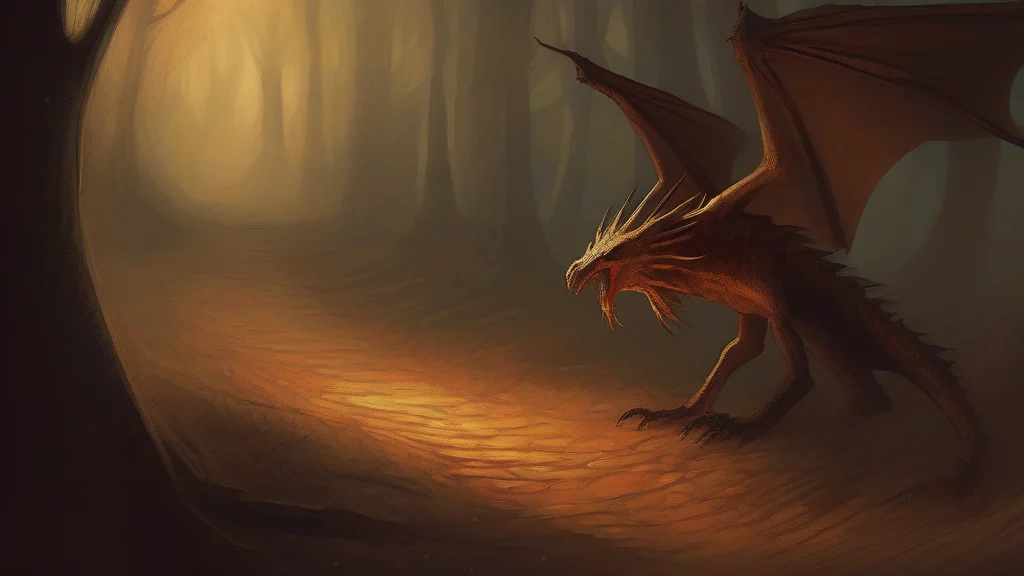
- The dragonlike monster who pursues the hero in Lewis Carroll's poem 'Jabberwocky'.
- Confused, nonsensical, or extravagantly convoluted speech or writing.
"The lecture drifted into a stream of jabberwocky that left the audience bemused."
"Lewis Carroll's 'Jabberwocky' tells the story of a hero who slays a fearsome monster with a vorpal blade."
"Most of his explanation was jabberwocky, but her expression made it clear that she was not impressed."
The plural is uncommon because the word is usually used as the name of a single fictional creature or as an uncountable term for nonsensical language.
"The speaker's jargon sounded like a swarm of jabberwockies."
Lewis Carroll invented the Jabberwocky in 1871, giving language history one of its most memorable imaginary monsters.
Reviewed by Deb Chak, Editor. AI-assisted content curated by RJS Tech Solutions LLP.
Where does jabberwocky come from?
Lewis Carroll introduced the word in the poem 'Jabberwocky', first published in 1871 as part of Through the Looking-Glass. He formed it from the earlier invented term 'jabberwock', with the added ending '-y' contributing to the poem's rhyme with 'wacky'. The underlying 'jabberwock' was itself Carroll's invention rather than a word inherited from an established Germanic or Romance language.
How jabberwocky is actually used
The capitalized form usually refers to the creature in Lewis Carroll's poem 'Jabberwocky', published in Through the Looking-Glass in 1871. The lowercase sense is informal and describes language that is nonsensical, muddled, or comically overcomplicated.