
What does jadeite mean?
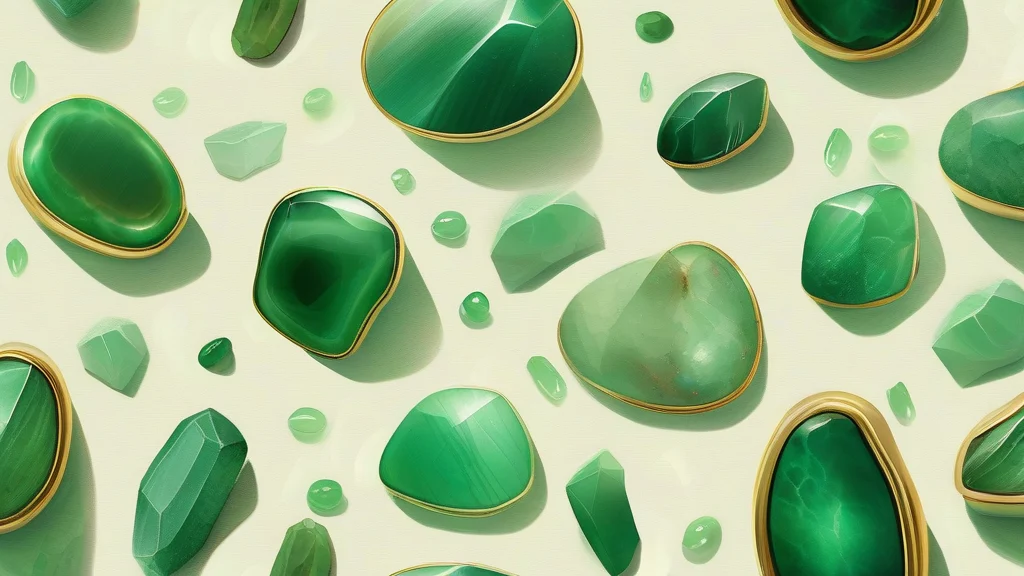
Jadeite is a hard mineral belonging to the pyroxene group and is one of the two minerals collectively called jade, the other being nephrite. When found in desirable green, translucent, or opaque forms, it is widely used for jewelry, carvings, beads, and decorative objects. The finest colored material, especially vivid or emerald green, can be exceptionally valuable. The word is more precise than “jade” in a mineralogical, gemological, or art-historical context, where the exact material matters: jadeite and nephrite have different mineral compositions and properties. In ordinary conversation, however, the broader term “jade” is more common, especially when describing a finished object or ornament. Jadeite can also occur in white, yellow, lavender, black, and other colors, so its identity is not determined by color alone.
nounA hard, translucent to opaque green mineral, a variety of pyroxene, that is one of the two minerals commonly known collectively as jade. It is valued for ornamental use and can occur in many colors, although the finest bright green material is highly prized.
- A hard pyroxene mineral forming part of the material known as jade, especially valued in bright green, translucent forms for carving and jewelry.
"The museum displayed an intricately carved pendant made of polished jadeite."
"The sculptor shaped the jadeite into a small figure of a bird."
"Gemologists examined the jadeite under magnification to determine its treatment and origin."
The plural is used when referring to multiple pieces, specimens, or items of jadeite.
"The collection included several rare jadeites from Myanmar."
Jadeite and nephrite are the two minerals behind the name jade: despite often being called one gemstone, they are mineralogically different.
Reviewed by Deb Chak, Editor. AI-assisted content curated by RJS Tech Solutions LLP.
Where does jadeite come from?
The English word jadeite was borrowed from German Jadeit, a mineralogical name formed from jade with the mineral suffix -ite. The suffix -ite is widely used in mineralogy for a particular mineral or mineral group, while jadeite distinguishes the pyroxene mineral from nephrite, the other material traditionally grouped under jade. The related English word jade has a separate and less certain derivation history and serves as the broader name for the material.
Related word forms
How jadeite is actually used
In jewelry and art-market contexts, “jadeite” specifically denotes the pyroxene mineral, while “jade” may refer either to jadeite or to nephrite. The term is primarily mineralogical and trade-oriented rather than general vocabulary.
Easily confused with jadeite
Jade is the general name for ornamental material derived from either jadeite or nephrite, whereas jadeite is the specific pyroxene mineral that forms one type of jade.