
What does jalousie mean?
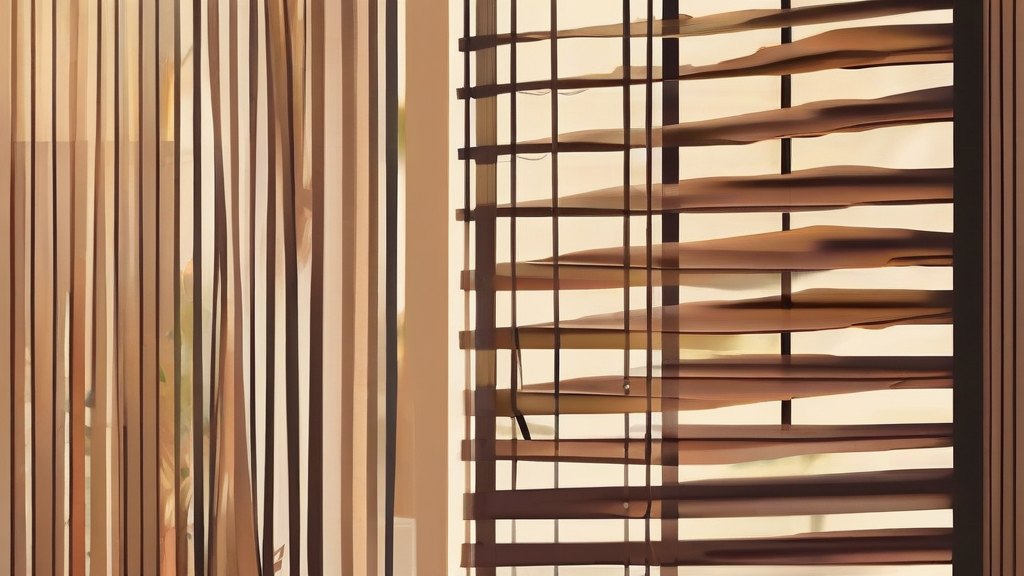
A jalousie is primarily a window covering made from horizontal slats that can be tilted to regulate light and visibility. In modern English this architectural meaning is dominant, and the word is often treated as a type of blind. The older abstract sense, a formal or literary variant of jealousy, still exists, especially in literary and historical contexts, but is much less common. A jalousie can offer a controlled view outdoors while shielding the interior, making it both a practical device and an apt symbol of guarded visibility. Because jalousie also preserves the older idea of jealousy, it has an unusual semantic history: a word associated with suspicion and emotional unease now most often names a piece of architecture. Its established use in descriptions of windows, doors, and slatted screens makes it a more specific and evocative term than the general word blind.
nounA window blind or screen made from horizontal slats that can be tilted to control light and visibility. In older or literary usage, the word can also mean jealousy.
- A blind or screen composed of horizontal slats that can be angled to regulate light, airflow, and privacy.
- In older or literary usage, jealousy or envious feeling.
"She lowered the jalousie as the afternoon sun struck the windows."
"The hotel room had a wide jalousie above the bed, allowing the guests to see the street without being seen."
"Her description of her husband's friendships was marked by an old-fashioned sense of jalousie."
The regular plural refers to multiple jalousies or to the abstract sense of jealousy, although the latter is uncommon in modern usage.
"Wooden jalousies covered the veranda of the old house."
Today it usually names a blind; in older English, it could simply mean jealousy.
Reviewed by Deb Chak, Editor. AI-assisted content curated by RJS Tech Solutions LLP.
Etymology of jalousie
The word entered English from French jalousie, originally meaning jealousy and derived from jaloux, meaning jealous. The noun came to denote a type of blind as well, and that architectural meaning became dominant in modern English. The English cognates jealous and jealousy preserve the older emotional association associated with the French source.
Related word forms
How jalousie is actually used
The architectural sense is dominant in modern English. The abstract sense meaning jealousy is now uncommon and tends to appear in formal, literary, or historical contexts.
Easily confused with jalousie
A jalousie usually denotes a slatted blind or screen, whereas jealousy denotes the emotion of envy or suspicion.