
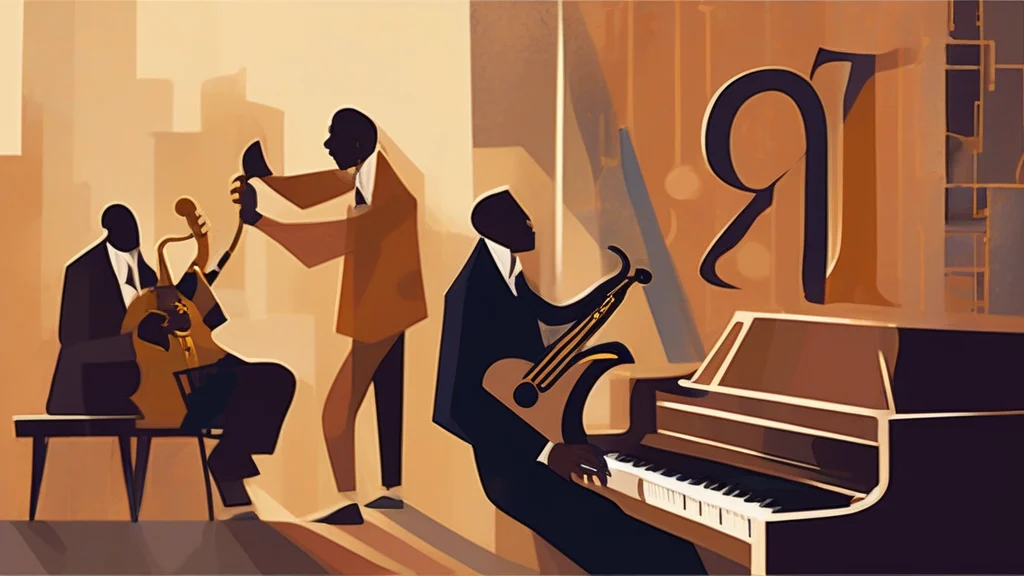
What does jazz mean?
“Jazz” primarily names a form of music that grew out of African American traditions in the United States, especially New Orleans, during the late 19th and early 20th centuries. Its best-known features include improvisation, syncopation, rhythmic swing, and the creative interpretation of melodies and harmonies. Musicians and listeners often use the word to refer broadly to jazz music, as in “a jazz standard” or “a jazz quartet,” while specific styles may be called bebop, swing, cool jazz, free jazz, fusion, or smooth jazz. In informal American English, “jazz” can also describe something energetic, stylish, or bold, and the verb “jazz up” means to make something livelier or more eye-catching. The word is now used internationally, although its musical and cultural origins are specifically American. Its precise linguistic origin remains uncertain, making its mysterious name a notable part of the vocabulary.
A genre of music that originated in African American communities in the United States and is characterized by improvisation, syncopated rhythms, swing, and expressive melodic development.
"The festival featured performances of jazz by ensembles from several generations."
The term is used internationally. When used as a mass noun, it does not normally take a plural.
To enliven, embellish, or make more attractive, especially in an informal or conspicuous way.
"They jazzed up the presentation with color and animation."
Informal; commonly used in the phrasal verb “jazz up.”
Lively, stylish, bold, or extravagantly expressive.
"The magazine gave the bold cover a deliberately jazz appearance."
Informal and chiefly associated with American English.
Rare; “jazz” is normally used as a mass noun. The plural is chiefly possible when referring to distinct bodies or styles of jazz music.
"The program explored the contrasting jazzes of New Orleans and Kansas City."
The origins of “jazz” remain famously mysterious: its earliest known uses appeared in early-20th-century African American speech, but no single explanation for the name has been proved.
Reviewed by Deb Chak, Editor. AI-assisted content curated by RJS Tech Solutions LLP.
Etymology of jazz
“Jazz” is an early-20th-century word whose exact origin is disputed. It is first securely attested in African American usage, particularly in connection with New Orleans, and later spread into wider American English as both a name for music and an informal descriptor. No proposed etymology has gained universal acceptance, and many folk explanations remain unproven.
Related word forms
How jazz is actually used
As a noun, “jazz” is standard and is not limited to the United States, although the music's history is rooted in African American communities. As an adjective meaning lively or stylish, and as a verb meaning to enliven or embellish, it is informal; “jazz up” is especially common in American English.