
What does jejunum mean?
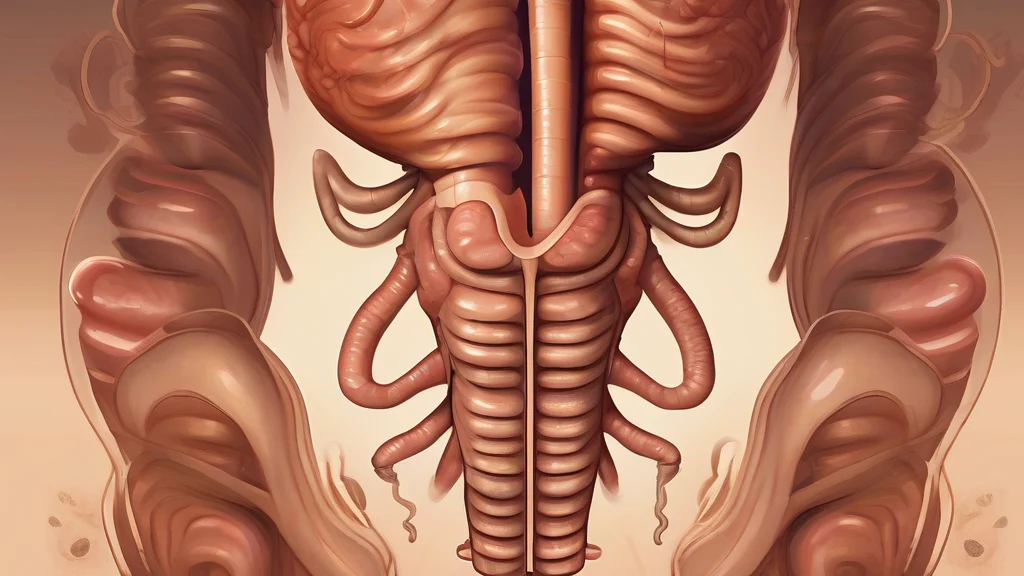
The jejunum is the middle section of the human small intestine, extending from the duodenum to the ileum. In the digestive system, it is especially important for the breakdown and absorption of carbohydrates, fats, proteins, vitamins, minerals, and other nutrients. Its name comes from Latin jejunum, the neuter form of jejunus, meaning “empty” or “lean.” The related English word jejune preserves this root but means “thin, scanty, or insubstantial” in figurative use. Jejunum is primarily a medical and anatomical term, appearing in discussions of abdominal anatomy, imaging, surgery, and conditions such as Crohn's disease, intestinal obstruction, and jejunal intussusception. Although it is often mentioned alongside the duodenum and ileum, it should not be confused with either of them. In ordinary conversation, the word is uncommon, but understanding the jejunum is useful for anyone studying nutrition, gastrointestinal health, or human anatomy.
nounThe jejunum is the middle portion of the small intestine, situated between the duodenum and the ileum. It is a major site of digestion and nutrient absorption.
- An anatomical term for the middle and second of the three divisions of the small intestine, lying between the duodenum and ileum and involved in digestion and nutrient absorption.
"The surgeon removed a segment of the patient's jejunum to treat a persistent intestinal obstruction."
"Most iron absorption in the small intestine takes place in the upper jejunum."
"The CT scan showed a narrowing of the jejunum caused by Crohn's disease."
The regular plural is used when referring to multiple instances or segments of the organ.
"The procedure involved joining two sections of the jejunums."
Jejunum comes from the Latin jejunus, meaning “empty, lean, or barren,” a root that also gave English the word jejune.
Reviewed by Deb Chak, Editor. AI-assisted content curated by RJS Tech Solutions LLP.
Where does jejunum come from?
The English anatomical term comes from Latin jejunum, the neuter form of jejunus, meaning “empty,” “lean,” or “barren.” It entered English through medical usage in the early modern period. The related English word jejune came through French from the same Latin root, while modern medical terms such as jejunal, jejunitis, jejunectomy, and jejunostomy were formed within the same word family.
Related word forms
How jejunum is actually used
This is a specialized anatomical and medical term, used in clinical writing, radiology, surgery, and biology. It has no notable regional variation in standard British or American usage.
Easily confused with jejunum
The jejunum is the middle section of the small intestine, whereas the ileum is its final section, extending from the jejunum to the large intestine.