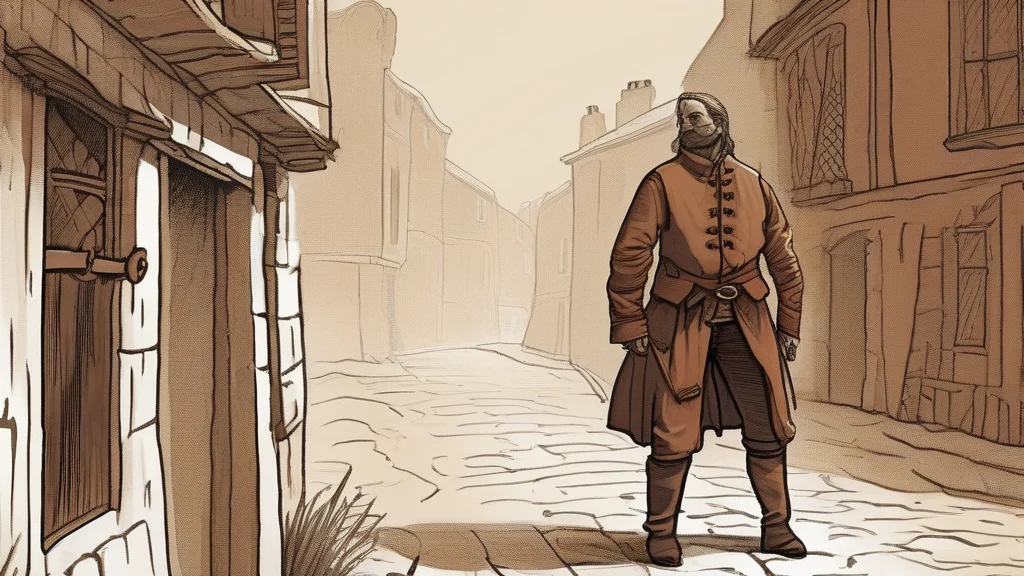
What does jerkin mean?
The jerkin is a historical garment that originated in the 16th century. It was a close-fitting jacket or coat made of leather or other material, worn over a shirt and breeches. The jerkin was a popular item of clothing among sailors, soldiers, and other working-class individuals. It was also worn by members of the upper class as a fashion statement. Today, the jerkin is mostly of interest to historical reenactors and fashion designers who draw inspiration from the past. The word 'jerkin' is not commonly used in modern language, but it can be found in historical or literary contexts. It is a useful word for those interested in fashion history or historical reenactment.
nounA close-fitting jacket or coat, typically made of leather or other material, worn over a shirt and breeches in the 16th and 17th centuries.
- A close-fitting jacket or coat
"The historical reenactor wore a jerkin and breeches to recreate the look of a 17th-century sailor."
"The historical reenactor wore a jerkin and breeches to recreate the look of a 17th-century sailor."
"The fashion designer created a modern jerkin-inspired coat for her latest collection."
The plural form 'jerkins' is used to describe multiple jerkins or to refer to a group of people wearing jerkins.
"The historical reenactors wore a collection of jerkins to recreate the look of a 17th-century sailor."
Reviewed by Deb Chak, Editor. AI-assisted content curated by RJS Tech Solutions LLP.
Etymology of jerkin
The word 'jerkin' originated from the French 'jerkin', which is derived from the Middle English 'jerkyn'. The Old French 'jerquen' is also an etymological precursor to the modern English word. The jerkin was a popular item of clothing in the 16th and 17th centuries, and its design and functionality were influenced by the needs of sailors and soldiers.
How jerkin is actually used
The word 'jerkin' is often used in historical or literary contexts to describe clothing from the 16th and 17th centuries. It is not commonly used in modern everyday language.