
What does jester mean?
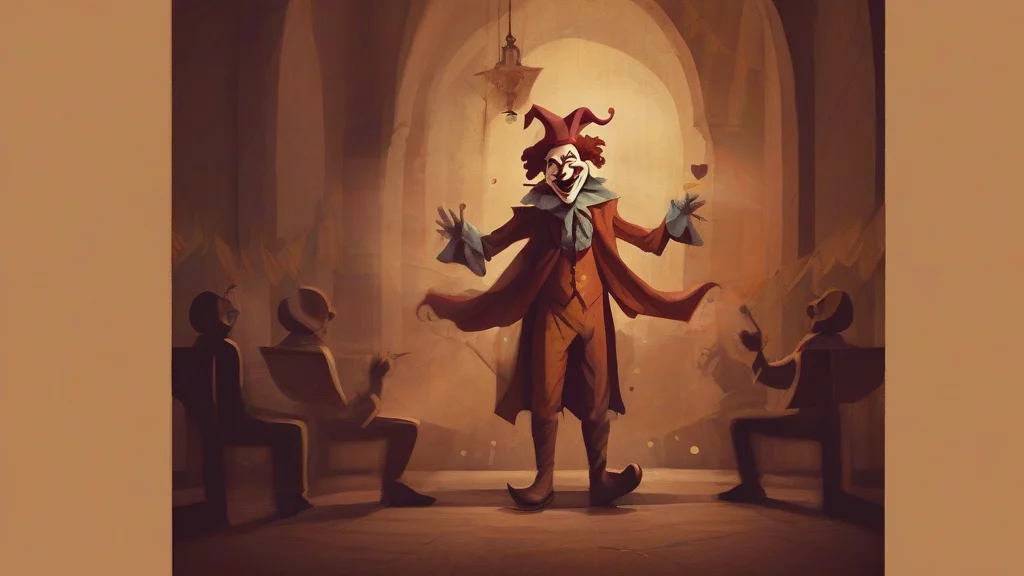
A jester is a person whose role is to provide comic entertainment, traditionally through jokes, songs, riddles, mimicry, or lively performances before a royal or aristocratic court. The best-known jesters belonged to medieval and early modern Europe, where they were often depicted wearing a distinctive cap and carrying a mock scepter or similar comic props. Although the position was generally subordinate, a jester could also use comedy to satirize courtiers or comment on political affairs. Today, the word most often appears in historical contexts, while figurative uses describe someone who plays the comic or fool for a group. The term carries a stronger historical and theatrical association than “joker,” which can refer to a playing card, a prankster, or a comic performer.
nounA jester was a professional comic entertainer, traditionally employed at a royal or aristocratic court. The word can also refer more generally to someone who tells jokes or behaves humorously.
- A professional comic entertainer, especially one who performed for a royal or aristocratic court.
- A person who jokes, acts comically, or serves as a source of amusement.
"The king and court laughed as the jester performed an amusing imitation of the chancellor."
"A jester entertained the court with songs, riddles, and comic sketches."
"He refused to play the jester when the audience was unwilling to laugh at the expense of others."
The plural is used for individual comic entertainers or historical court performers.
"Several jesters performed for European courts during the medieval period."
The court jester was more than a comic entertainer: in many medieval courts, the privilege of mocking powerful figures made laughter a form of licensed criticism.
Reviewed by Deb Chak, Editor. AI-assisted content curated by RJS Tech Solutions LLP.
Where does jester come from?
The word entered Middle English from an Anglo-French and Old French form meaning a professional joker or entertainer. These forms were connected with the Old French verb for telling jokes and ultimately with Latin words associated with jesting and play. The related English word “jest” preserves the same central idea, while “jocular” and “jocund” belong to the same broader Latin root.
Related word forms
How jester is actually used
Historically, the word usually denotes a court entertainer rather than a performer in a modern circus. In modern figurative use, calling someone a jester may suggest playful foolishness and can sound dismissive or archaic.
Easily confused with jester
A jest is a joke or playful remark, whereas a jester is a person who provides humorous entertainment.