
What does jewelled mean?
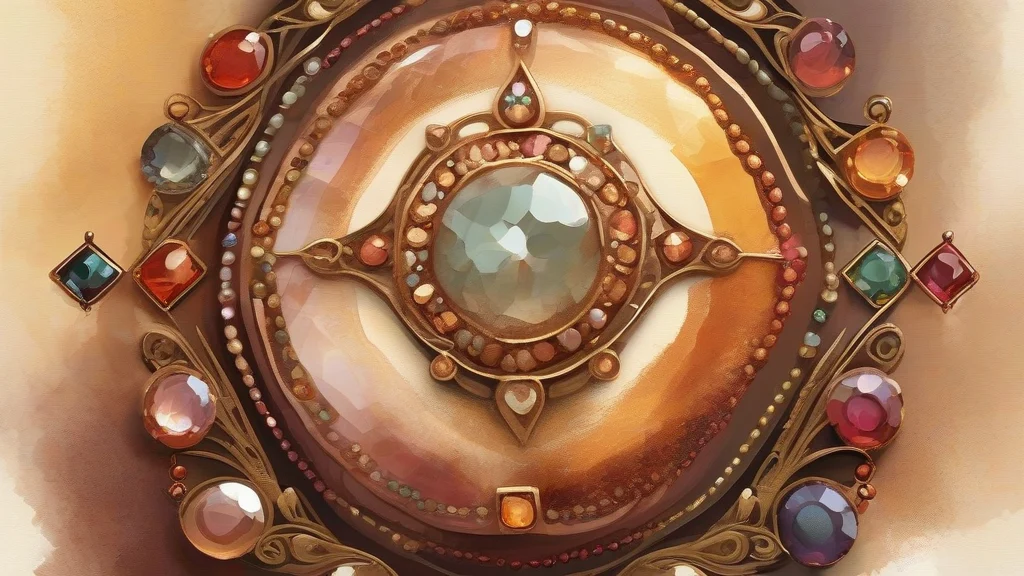
Jewelled is an adjective meaning decorated with jewels, gemstones, or other precious ornaments. It is often used for ceremonial and luxurious objects, such as crowns, tiaras, rings, necklaces, and brooches, especially when their jewels or decorative stones are prominent. The word can convey opulence, tradition, status, and visual splendour, although it may also suggest a deliberately extravagant or ornate appearance. British English normally spells it with two l’s, while American English uses “jeweled.” In literary or descriptive contexts, “jewelled” can also apply more broadly to objects that resemble jewels or are conspicuously glittering, as in “a jewelled sky.” It is especially useful when describing the combination of precious materials, intricate craftsmanship, and ceremonial significance.
adjectiveDecorated or covered with jewels, or set with precious or decorative stones. It can also describe a crown, ornament, or other object made conspicuous by its gems.
- Decorated with or covered in jewels or precious stones.
- Made splendid or conspicuous by jewels, gems, or other ornamental details.
"The queen wore a jewelled crown at the ceremony."
"The jewelled brooch depicted a tiny golden dragon."
"Her jewelled earrings caught the light as she stepped onto the stage."
A jewelled object turns light into a display of colour, making the decoration itself part of its story.
Reviewed by Deb Chak, Editor. AI-assisted content curated by RJS Tech Solutions LLP.
Where does jewelled come from?
The word comes from the English noun “jewel,” which ultimately derives from Old French “juel,” itself associated with the medieval Latin “jocalia,” meaning ornaments or precious stones. The adjective developed through the addition of the participial ending -ed. The same source underlies British “jeweller” and “jewellery,” as well as American “jeweler” and “jewelry.”
Related word forms
How jewelled is actually used
In British English, “jewelled” is the usual spelling; American English generally uses “jeweled.” The word is commonly used for ornate objects associated with wealth, royalty, ceremony, or formal dress, but it can also describe any prominently gem-set object.