What does jiving mean?
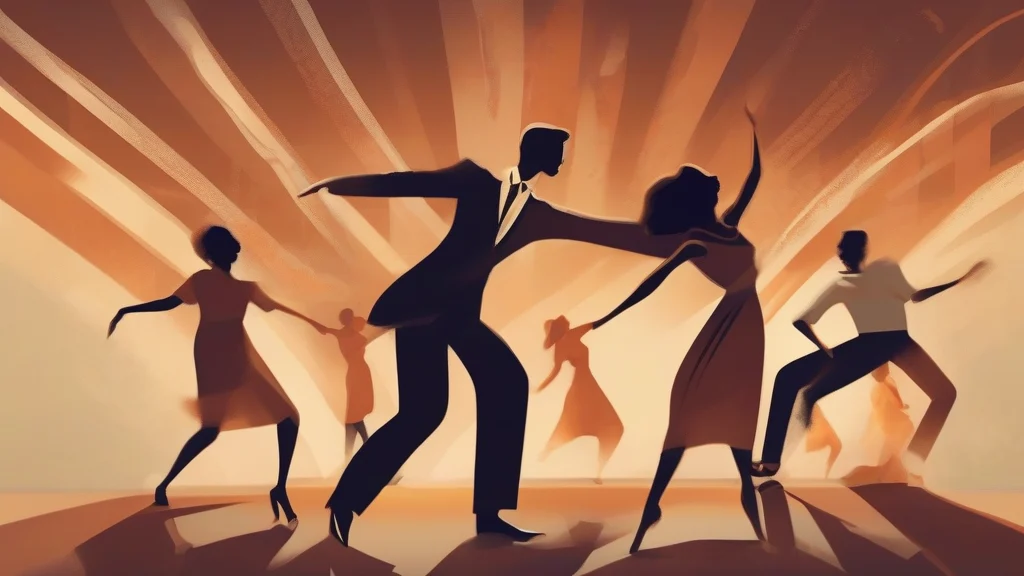
Jiving is a verb that means to dance or move to music in a lively and energetic way. It often involves a carefree or playful attitude, and can be used to describe a wide range of movements, from simple swaying to more complex dance styles. The word has its roots in the 1940s, when it was used to describe the energetic and lively dance styles of the time. Today, jiving is still used to describe dancing, but it can also be used more broadly to describe any kind of lively or energetic movement. The word has a positive connotation, suggesting a sense of freedom and joy. It is often used in informal settings, such as parties or dance clubs, but can also be used in more formal contexts, such as dance performances or music videos.
verbTo dance or move to music in a lively and energetic way, often with a carefree or playful attitude.
- 1. To dance or move to music in a lively and energetic way
"The crowd was jiving to the beat of the music, waving their arms and dancing in the aisles."
"The crowd was jiving to the beat of the music, waving their arms and dancing in the aisles."
"The dancer was jiving across the stage, her movements fluid and carefree."
Reviewed by Deb Chak, Editor. AI-assisted content curated by RJS Tech Solutions LLP.
Etymology of jiving
The word 'jiving' has its roots in the 1940s, when it was used to describe the energetic and lively dance styles of the time. It is likely derived from the verb 'to drive', which means to move or propel something forward. Over time, the word 'jiving' evolved to describe not just the physical movement of dancing, but also the sense of energy and enthusiasm that comes with it.
How jiving is actually used
Jiving is often used in informal settings, such as parties or dance clubs, but can also be used in more formal contexts, such as dance performances or music videos. It has a positive connotation, suggesting a sense of freedom and joy. It is often used to describe a wide range of movements, from simple swaying to more complex dance styles.