
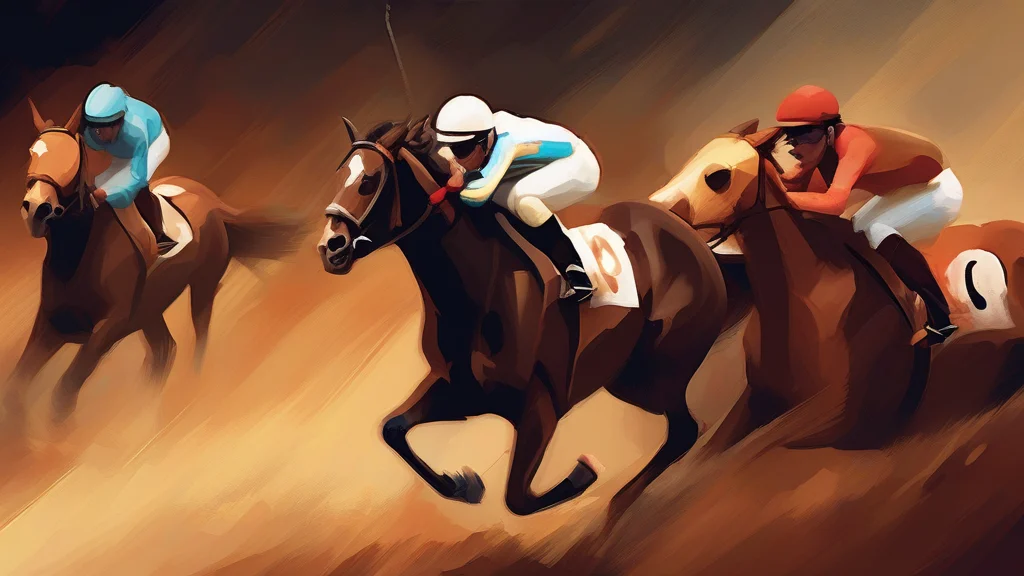
What does jockeying mean?
Jockeying means competing for an advantage or maneuvering strategically to secure a favorable position. It is especially common in descriptions of political rivalry, business competition, negotiations, and other situations in which participants seek to gain the upper hand. The word can suggest energetic maneuvering rather than straightforward competition, and it may imply persistence, opportunism, or an attempt to influence events. Its literal connection is with horse racing, where jockeys ride horses in races. Today, the figurative use is much more frequent in everyday and political usage, where the phrase “jockeying for position” is especially common. As a gerund, jockeying naturally describes an ongoing activity: people may be jockeying for influence, bargaining power, attention, or control. It is a useful word for conveying the active, competitive effort involved in trying to get ahead.
To compete or maneuver for an advantage, especially in politics, business, or another competitive situation.
"The department was jockeying for a larger share of the budget."
Commonly used in the figurative sense; it can imply active maneuvering for advantage.
The activity of competing or maneuvering for an advantage, especially in a political or competitive context.
"The negotiations were marked by constant jockeying for influence."
This is a gerund-based noun and is especially common in phrases such as “political jockeying.”
From the world of horse racing, jockeying has become a vivid metaphor for the maneuvering and competition that shape politics and business.
Reviewed by Deb Chak, Editor. AI-assisted content curated by RJS Tech Solutions LLP.
Where does jockeying come from?
The word derives from “jockey,” a rider or competitor in horse racing. In figurative use, “jockey” developed the broader sense of competing or maneuvering for an advantage, probably because riders jockeyed for position during races. The present participle “jockeying” follows the ordinary English pattern of adding -ing to a verb, and its figurative meaning is now considerably more prominent than its literal sporting sense.
How jockeying is actually used
The figurative sense is common in British and US English and often carries the connotation of strategic maneuvering, sometimes involving persistence or opportunism. The horse-racing sense is less frequent but established.
Easily confused with jockeying
As a verb, jockeying describes competing for or maneuvering toward an advantage, while the noun form is commonly used for the activity or process of doing so.