
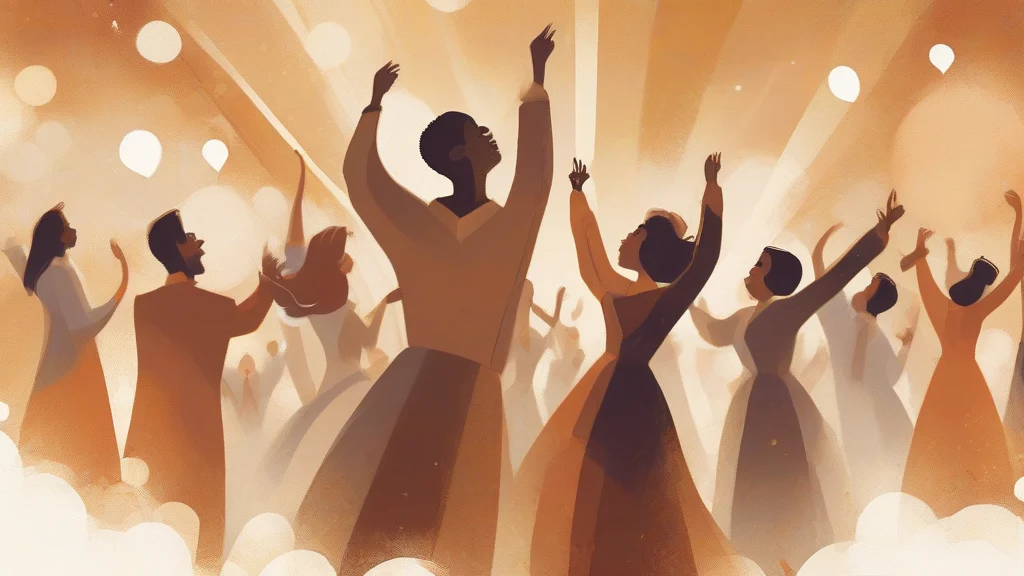
What does jubilation mean?
Jubilation is a noun for intense happiness, exultation, or celebration. It is often used when a happy event is especially significant, such as a major victory, a welcome announcement, or the resolution of a long-awaited endeavour. The word can refer to an individual's inner state, as in feelings of jubilation, or to a group's public expression of delight, as when a crowd erupts in jubilation. Its tone is generally formal and emphatic, carrying connotations of triumph, relief, and communal celebration. Compared with the broad word happiness, jubilation suggests a much more exuberant emotional response. It is also more focused and intense than celebration, which may simply refer to an organized event or observance. Jubilation is consequently a useful word for describing extraordinary happiness that merits a correspondingly strong expression.
nounA feeling or expression of great happiness and celebration. It often conveys a sense of intense joy, triumph, or public rejoicing.
- A state of intense happiness or exultation.
- The expression or celebration of great joy, especially by a group.
"The team's victory was met with jubilation throughout the town."
"There wasjubilation when the final result was announced."
"She looked at the acceptance letter and burst into jubilation."
Usually used as an uncountable mass noun; the plural is uncommon but is used for distinct acts or expressions of jubilation.
"The successive victories were greeted with jubillations across the city."
When ordinary happiness is not enough, it is jubilation: the full-throated celebration of triumph.
Reviewed by Deb Chak, Editor. AI-assisted content curated by RJS Tech Solutions LLP.
Where does jubilation come from?
Jubilation entered English in the early 17th century from the Latin noun jubilatio, a “shouting of joy” or public rejoicing. Latin jubilatio was derived from jubilare, “to shout, cheer, or rejoice,” which is also the source of jubilant and jubilate. The same wider Latin tradition produced jubilee through French, linking the word to expressions of public festivity and celebration.
Related word forms
How jubilation is actually used
The word is formal and often conveys a degree of joy stronger than ordinary happiness. It may describe either a private emotional state or the public celebration of an event.
Easily confused with jubilation
Jubilation is a noun naming a feeling or celebration of joy, whereas jubilant is an adjective describing someone or something joyful.