
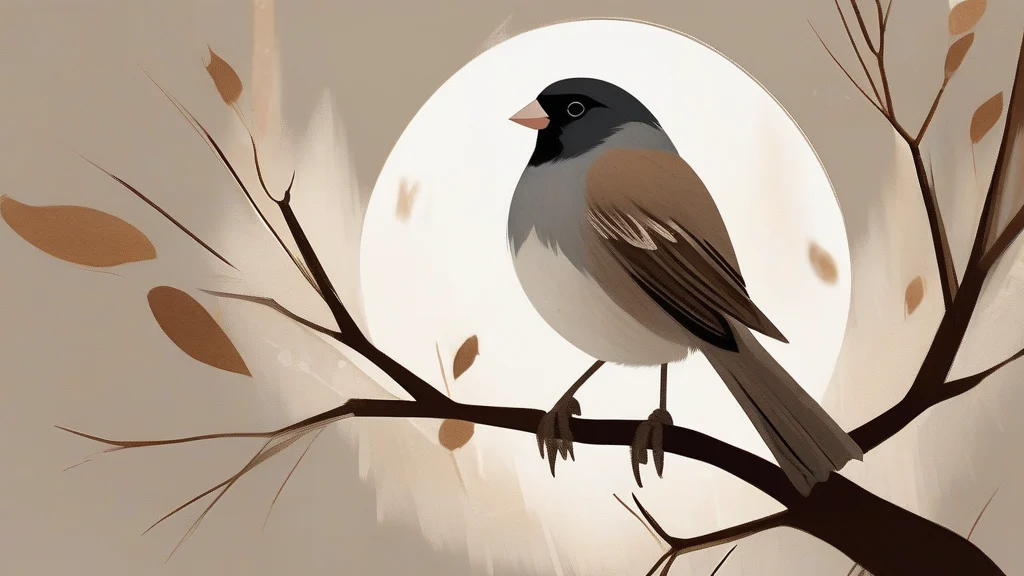
What does junco mean?
The junco is a small, sparrow-like bird that is typically gray or brown in color, with a distinctive white outer tail feather. Juncos are found in a variety of habitats, including forests, grasslands, and backyards. They are social birds and are often seen in small flocks, particularly during the winter months when they are attracted to seed and suet feeders. Juncos are a delight to watch, flitting between the feeders and the trees. They are also known for their distinctive white outer tail feathers, which are a striking contrast to their dull gray back. Overall, the junco is a charming and interesting bird that is a pleasure to observe.
nounA junco is a small, sparrow-like bird that is typically gray or brown in color, with a distinctive white outer tail feather. Juncos are found in a variety of habitats, including forests, grasslands, and backyards.
- A small, sparrow-like bird that is typically gray or brown in color, with a distinctive white outer tail feather.
"The junco perched on the windowsill, its white tail feathers a striking contrast to its dull gray back."
"The junco perched on the windowsill, its white tail feathers a striking contrast to its dull gray back."
"The juncos in our backyard are a delight to watch, flitting between the feeders and the trees."
The plural form of 'junco' is typically used when referring to multiple birds.
"The juncos in our backyard are a delight to watch, flitting between the feeders and the trees."
Reviewed by Deb Chak, Editor. AI-assisted content curated by RJS Tech Solutions LLP.
Etymology of junco
The word 'junco' is derived from the Latin 'juncus', which refers to a type of rush or grass. The term 'junco' was first used in the 17th century to describe a type of bird that was similar to the sparrow. Over time, the term 'junco' has come to be used specifically to describe the small, sparrow-like bird that is typically gray or brown in color, with a distinctive white outer tail feather.
How junco is actually used
Juncos are often found in backyards, particularly during the winter months when they are attracted to seed and suet feeders. They are social birds and are often seen in small flocks.