What does junta mean?
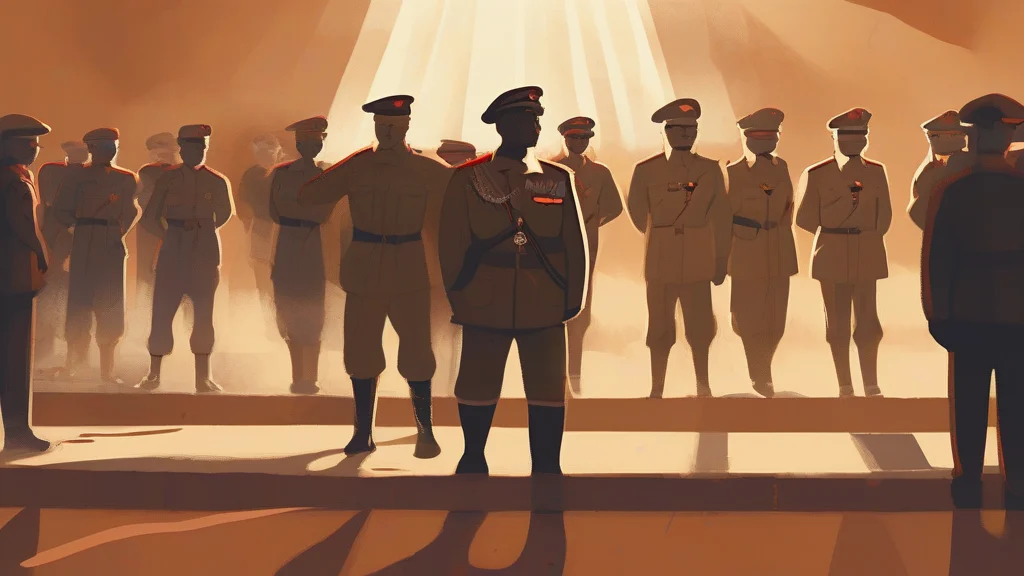
A junta refers to a small group of individuals, often military officers, who seize control of a country or organization, typically through a coup d'état. This form of governance is often characterized by authoritarian tendencies, suppression of dissent, and human rights abuses. The term junta is frequently used in a pejorative manner, implying a lack of democratic legitimacy or process. Juntas can arise in various contexts, including military takeovers, revolutionary movements, or power vacuums. Understanding the implications and connotations of the term junta is essential for analyzing and discussing contemporary politics and governance structures.
nounA junta is a small group of people, especially military officers, who control a country or organization after taking power by force or coup. This term often carries connotations of authoritarianism and repression.
- A small group controlling a country or organization
- A type of authoritarian government
"The military junta that ruled the country for a decade was notorious for its human rights abuses."
"The junta imposed strict censorship on the media."
"The country's transition from a junta to a democracy was hailed as a major success."
The plural form is used when referring to multiple groups or instances of juntas.
"The country has had several juntas throughout its history, each with its own distinct characteristics and policies."
Reviewed by Deb Chak, Editor. AI-assisted content curated by RJS Tech Solutions LLP.
Etymology of junta
The word junta originates from the Spanish language, where it means 'council' or 'committee'. It is derived from the Latin word 'junctus', meaning 'joined' or 'united'. The term has been adopted into various languages, including English, to describe a small group of people controlling a country or organization.
How junta is actually used
Often used pejoratively to imply a lack of democratic legitimacy or process. Frequently associated with military coups, authoritarianism, and repression.