What does jurassic mean?
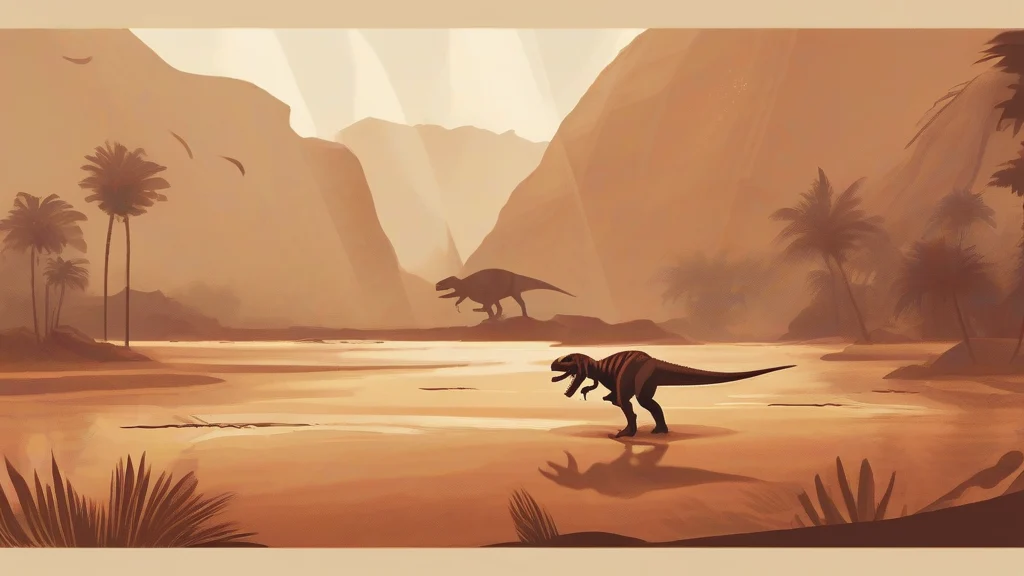
The word Jurassic refers to the geological period that spanned from about 200 to 145 million years ago. It is characterized by the dominance of dinosaurs and the formation of many iconic rock formations. The Jurassic period is often divided into three stages: Early, Middle, and Late. During this time, the supercontinent of Pangaea began to break apart, and the modern continents started to take shape. The Jurassic period is also notable for the evolution of many plant species, including conifers and cycads. In modern usage, the term Jurassic is often used in formal or scientific contexts to refer to this geological period. It is a useful word for paleontologists, geologists, and anyone interested in the history of our planet.
adjectiveRelating to or denoting the Jurassic period, a geological period during the Mesozoic era from about 200 to 145 million years ago.
- Relating to or denoting the Jurassic period
"The museum's dinosaur exhibit featured a large T. rex skeleton from the Jurassic period."
"The museum's dinosaur exhibit featured a large T. rex skeleton from the Jurassic period."
"The Jurassic period saw the rise of many iconic dinosaurs."
Reviewed by Deb Chak, Editor. AI-assisted content curated by RJS Tech Solutions LLP.
Etymology of jurassic
The word Jurassic comes from the Jura Mountains in western Europe, where the period's characteristic rock formations were first identified. The name was coined by French geologist Alexandre Brongniart in 1829. The term is derived from the Latin word 'jura', meaning 'mountains', and the suffix '-ic', indicating a place or region.
How jurassic is actually used
Jurassic is often used in formal or scientific contexts to refer to the geological period.