
What does kava mean?
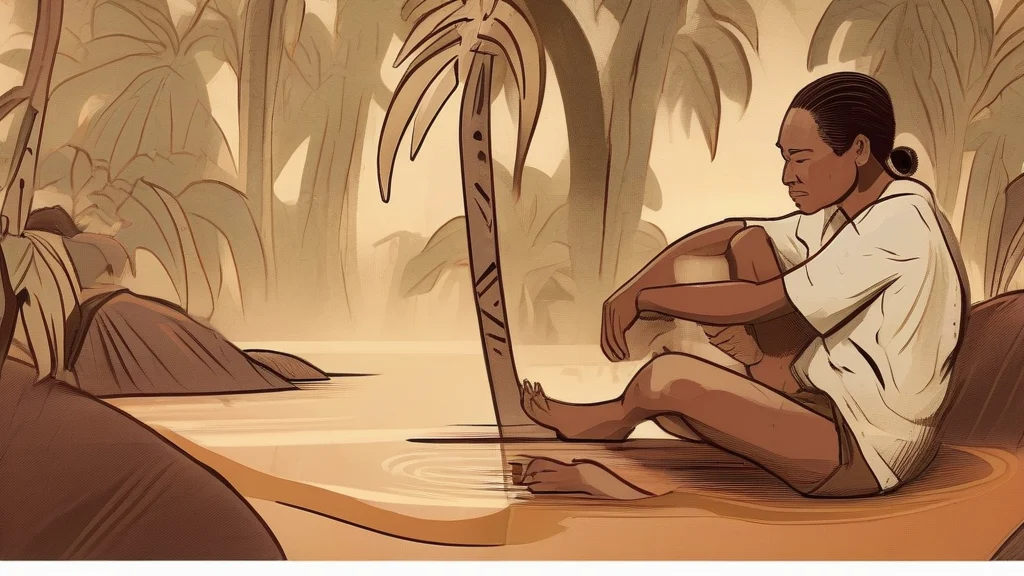
Kava refers both to Piper methysticum, a plant with large heart-shaped leaves, and to the traditional drink made from its roots. The drink is usually prepared by pounding or grinding the roots and mixing them with water. Across many Pacific societies, sharing kava forms an important part of formal hospitality, ceremony, and social interaction, and it may be presented according to carefully observed customs. Outside the Pacific, kava is also used to refer to the root material, prepared beverages, and experiences associated with kava bars or cultural events. Although it is sometimes compared with alcohol because of its role in social rituals, kava is a distinct substance with its own cultural history. The word therefore names not merely a beverage but a plant, a cultural practice, and a tradition of welcome.
nounKava is a plant of the pepper family, especially Piper methysticum, whose roots are used to prepare a traditional ceremonial drink. The word can also refer to the drink itself or to a gathering at which it is consumed.
- The plant Piper methysticum, whose roots are used to make kava.
- A traditional drink prepared from kava roots, often shared as part of a ceremony.
- A formal gathering or ceremony at which kava is presented and consumed.
"The chief welcomed the visitors with a bowl of kava during the traditional ceremony."
"She was offered a shell of kava as a sign of welcome."
"The kava ceremony followed the formal speeches and presentations."
Usually used as a mass noun; the plural is uncommon.
"The museum displays several kavas prepared according to different Pacific traditions."
Kava links a distinctive plant, a ceremonial drink, and a living tradition of hospitality across much of the South Pacific.
Reviewed by Deb Chak, Editor. AI-assisted content curated by RJS Tech Solutions LLP.
Where does kava come from?
The English word comes from a Polynesian term for the plant and its traditional preparation, notably Tongan kava. Related forms occur in other Polynesian languages, including Samoan ava and Hawaiian ʻava. The word entered English through accounts of Pacific travel and was subsequently adopted in botanical, commercial, and cultural descriptions.
How kava is actually used
Kava is used especially in relation to Pacific Island cultures, including Fiji, Vanuatu, Tonga, Samoa, and Papua New Guinea. In everyday English, it most often refers to the drink or the plant; the ceremonial sense is more specialized.
Easily confused with kava
Kava is a traditional drink made from the roots of Piper methysticum, whereas cava is a Spanish sparkling wine.