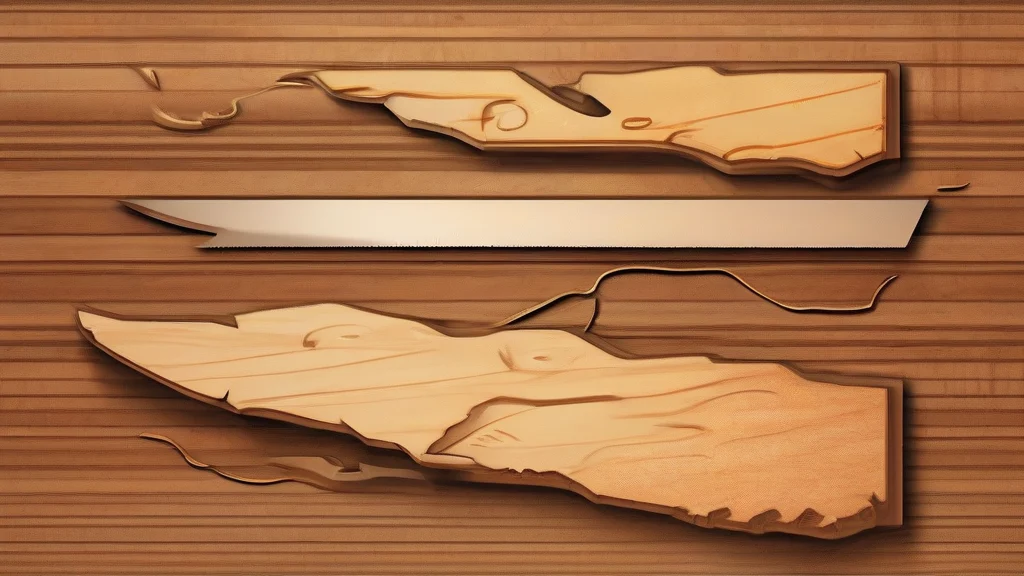
What does kerf mean?
The term kerf refers to the width of a cut made by a saw or other cutting tool, typically in woodworking or carpentry. It is an essential concept to understand when working with wood, as it affects the accuracy of cuts and the fitting of pieces. The kerf is determined by the thickness of the saw blade or cutting tool and can vary depending on the type of saw or tool used. Understanding the kerf is crucial to avoid errors and ensure precise fits. The term is primarily used in the US and is a specialized term in the context of woodworking and carpentry.
nounThe kerf is the width of a cut made by a saw or other cutting tool. It refers to the thickness of the cut or the gap left between two pieces of wood after cutting.
- The width of a cut made by a saw or other cutting tool.
- The gap or slit left between two pieces of wood after cutting.
"The carpenter had to account for the kerf of the saw blade when measuring the wood for the project."
"The carpenter had to account for the kerf of the saw blade when measuring the wood for the project."
"The kerf of the cut was too wide, causing the pieces to not fit together properly."
The plural form 'kerfs' is used when referring to multiple cuts or widths.
"The carpenter had to measure the kerfs of the different saw blades to determine which one to use."
Reviewed by Deb Chak, Editor. AI-assisted content curated by RJS Tech Solutions LLP.
Etymology of kerf
The word 'kerf' originated in the mid-19th century, likely derived from the Old English word 'cerven', meaning 'to cut' or 'to carve'. It is related to the Modern English word 'carve'. The term has evolved to specifically refer to the width of a cut made by a saw or other cutting tool.
How kerf is actually used
The term 'kerf' is often used in woodworking and carpentry. It is an important consideration when working with wood to ensure accurate cuts and proper fitting of pieces.