
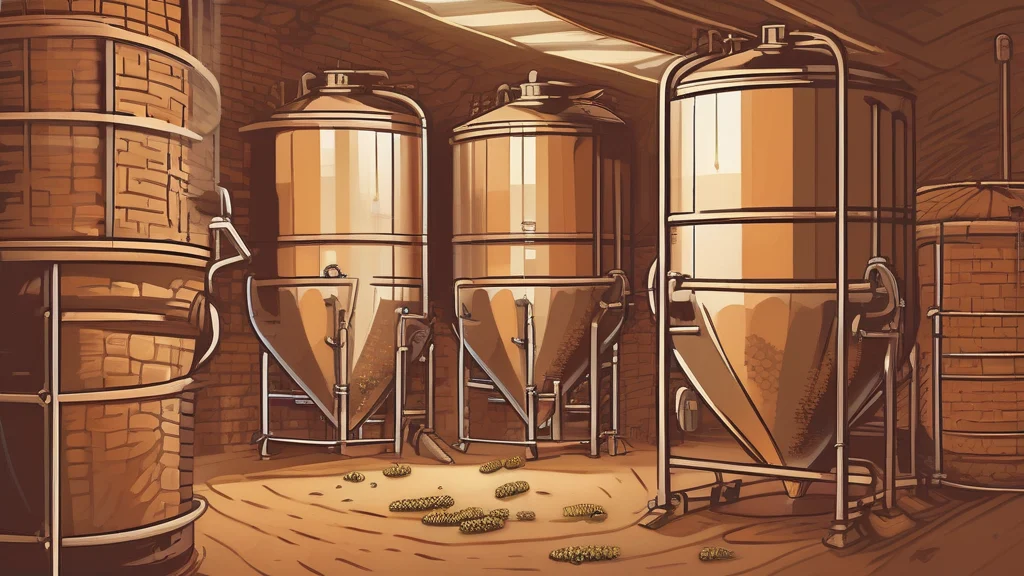
What does kilning mean?
Kilning is the process of drying hops in a kiln. Freshly harvested hops must be treated promptly, and heating them in a kiln stops unwanted biological development while reducing moisture. This makes the hops more stable for storage and later use in brewing. The word belongs primarily to specialist vocabulary associated with hop production, brewing, and the history of food processing. Although it is understood in both British and American English, modern references often use the plainer expression “kiln drying.” In a sentence, kilning normally appears either as a gerund—“kilning the hops”—or as a noun naming the treatment, as in “the kilning of hops.” The related word kiln names the structure in which the process occurs, not the process itself. For readers interested in the history of beer, kilning is noteworthy because it represents an early form of controlled preservation: heat transforms a fragile agricultural product into one that can be stored and transported.
nounThe process of drying hops in a kiln to halt further growth and preserve them, especially for use in brewing. The term is now chiefly associated with the traditional processing and storage of hops.
- The process of drying hops in a kiln to preserve them and prepare them for brewing.
"Kilning the hops helps preserve their aroma and prepare them for brewing."
"Kilning the hops helps preserve their aroma and prepare them for brewing."
"The brewery still uses kilning to stabilize hops before storage."
The plural is grammatically possible but rarely needed, since the process is normally treated as an uncountable noun.
"The workshop recorded the kilnings of hops from several harvests."
Kilning halts the growth of fresh hops, turning them into a stable ingredient for brewing.
Reviewed by Deb Chak, Editor. AI-assisted content curated by RJS Tech Solutions LLP.
Etymology of kilning
Kilning was formed in English by adding the suffix -ing to kiln, meaning “the action of kiln-drying.” The word kiln comes through Middle English from Old English cyln, which was borrowed from Latin calīnus; the borrowing reflects the long-established use of ceramic ovens in the British Isles.
How kilning is actually used
Chiefly a specialist term in brewing, agriculture, and the historical processing of hops. It is more common in descriptive or historical writing than in everyday speech.
Easily confused with kilning
A kiln is the enclosed structure used for drying material, whereas kilning is the drying process performed in such a structure.