What does kinkajou mean?
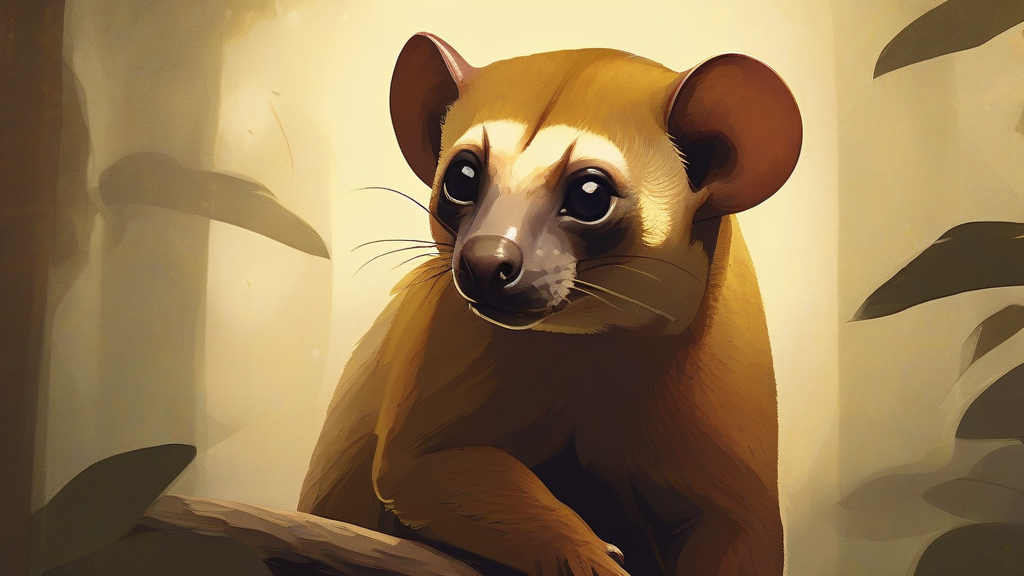
The kinkajou, also known as the honey bear, is a medium-sized, carnivorous mammal native to Central and South America. Characterized by its golden fur and long, thin body, it is a member of the raccoon family (Procyonidae). Kinkajous are known for their ability to rotate their hind feet 180 degrees and are primarily nocturnal animals. They are often found in trees, where they use their prehensile tails to grasp branches. The kinkajou is an important part of its ecosystem, playing a role in seed dispersal and insect control. Its unique appearance and behaviors make it a fascinating subject for study and observation.
nounThe kinkajou is a carnivorous mammal native to Central and South America, characterized by its golden fur and long, thin body. It is a member of the raccoon family.
- A medium-sized, carnivorous mammal.
- A member of the raccoon family (Procyonidae).
"The kinkajou climbed up the tree, its prehensile tail grasping the branch."
"The kinkajou is also known for its ability to rotate its hind feet 180 degrees."
"In the wild, kinkajous are primarily nocturnal animals."
The plural form 'kinkajous' is used to refer to multiple individuals of this species.
"The researchers observed several kinkajous in their natural habitat."
Reviewed by Deb Chak, Editor. AI-assisted content curated by RJS Tech Solutions LLP.
Etymology of kinkajou
The word 'kinkajou' comes from the Algonquian language, which was spoken by indigenous peoples in North America. The kinkajou's scientific name, Potos flavus, is derived from the Greek words 'potos', meaning 'drinking', and 'flavus', meaning 'yellow'.
Usage notes
The term 'kinkajou' is often used in scientific and informal contexts to refer to this specific species of mammal.