
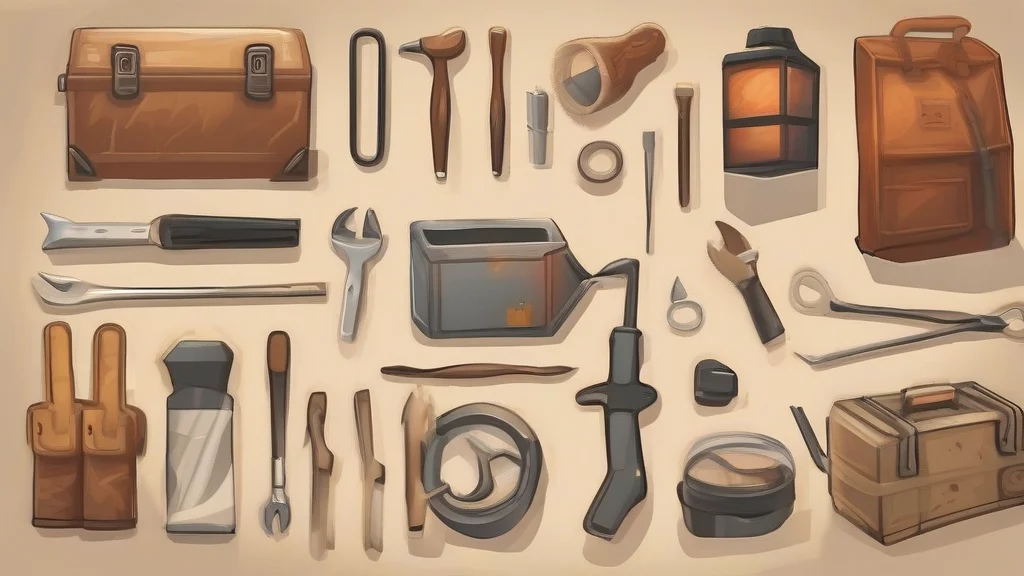
What does kit mean?
“Kit” is a versatile English noun and verb. Its most familiar noun sense is a set of tools, clothing, or supplies designed for a particular purpose, as in a first-aid kit, tool kit, or survival kit. It can also mean a collection or group of people or things, particularly in informal expressions such as “the whole kit and caboodle.” In older and specialist usage, a “kit” is a young fox. As a verb, “kit” means to equip or dress oneself, often used in the phrase “kit out.” The word is common in both British and American English and has a practical, everyday tone. It is useful because it captures the idea of a coordinated set of items, whether those items are tools, clothes, or equipment. Its range also allows it to refer figuratively to a group of people or the entirety of something, giving it a memorable flexibility beyond its literal meanings.
A set of tools, clothing, or other items needed for a particular purpose; a collection or group of people or things; or a young fox.
"The expedition leader checked each member of the climbing kit before departure."
The equipment sense is the dominant modern use. The young-fox sense is now mainly literary or specialist, while the group sense is often informal.
To equip or dress oneself with a set of tools, clothing, or other items.
"They kitted themselves out with hiking boots, waterproof jackets, and maps."
This use is informal and is especially frequent in British English. The phrase “kit out” is the usual form.
The standard plural of the noun is “kits,” as in “several first-aid kits.”
"The hospital keeps kits for emergencies throughout the building."
One small word has carried everything from a mechanic's tools to a fox's offspring—and still means “the whole lot” in the phrase “the whole kit and caboodle.”
Reviewed by Deb Chak, Editor. AI-assisted content curated by RJS Tech Solutions LLP.
Where does kit come from?
The word appears in Middle English in several senses, including a collection of equipment and a young animal. The sense meaning equipment is generally traced to Middle Dutch “kete,” probably connected with a Germanic word for a collection or set, while the precise origin of the young-animal sense is less certain. “Kitten” and “kitty” developed as related English forms, and comparable words occur in other Germanic languages.
Related word forms
How kit is actually used
“Kit” is neutral in British and American English and commonly refers to equipment for a specific activity, such as a first-aid kit, a survival kit, or a press kit. “The whole kit and caboodle” is an informal expression for an entire collection. The verb “kit” and the expression “kit out” are more informal and especially common in British English.
Easily confused with kit
A kite is a bird of prey or a lightweight aircraft, whereas a kit is usually a set of equipment or a young fox.
A kid is a child or a young goat, while a kit is generally a set of equipment or, in specialist use, a young fox.