
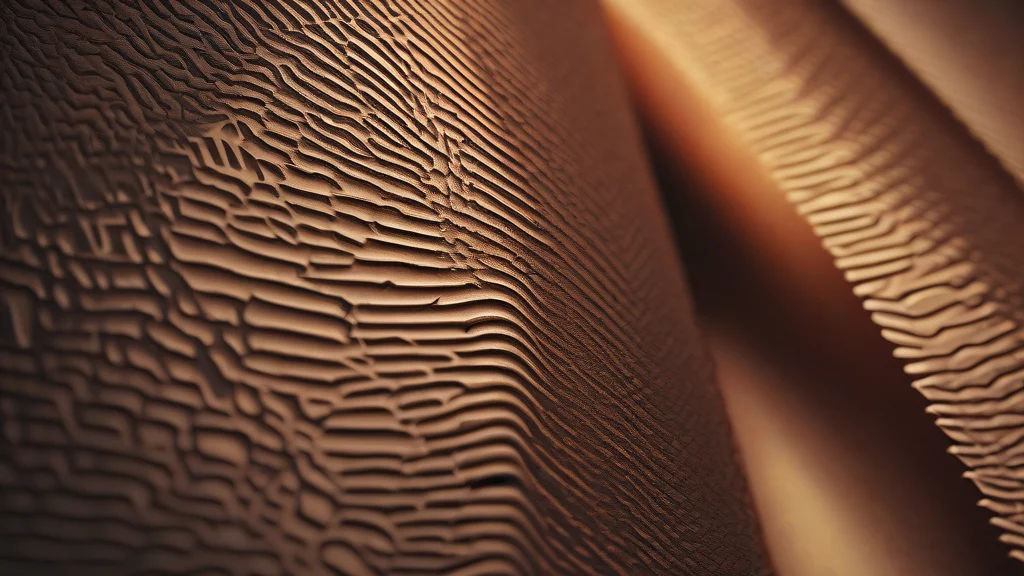
What does knurling mean?
Knurling is the formation or presence of a surface covered with small ridges, grooves, or raised bumps. It is most often produced on metal parts—such as knobs, handles, adjustment collars, and tool shafts—to make them easier to grip and reduce slipping. The texture may be fine, coarse, straight, or diamond-shaped, depending on the intended use. Although the word can describe the finished pattern, it also names the manufacturing technique used to create it. Knurling is common in engineering, machining, metalworking, and toolmaking, where practical friction and secure handling matter more than a smooth appearance. In everyday descriptions, the term is usually reserved for deliberate mechanical texturing rather than an accidental rough surface, and it is typically treated as an uncountable mass noun.
nounA rough, ridged texture made by pressing or cutting a pattern of small raised grooves into a metal or other hard surface. The process or technique of producing such a texture is also called knurling.
- A pattern of small ridges or grooves impressed on a metal or other hard surface, usually for grip or friction.
- The process of forming such a ridged surface.
"The machinist added fine knurling to the handle to give it a secure grip."
"The technician inspected the knurling around the adjustment collar."
"Diamond knurling gives the metal pin a firm, non-slip surface."
Usually uncountable; the plural is rare and may refer to distinct knurled areas or results.
"The factory inspected the knurlings on the finished shafts."
A knurled surface turns a smooth metal tool into something easier to hold, using a texture borrowed from the rind of a knobby root.
Reviewed by Deb Chak, Editor. AI-assisted content curated by RJS Tech Solutions LLP.
Where does knurling come from?
The word comes from the English noun 'knurl', meaning a small rounded ridge or lump on a surface. The suffix '-ing' forms the gerund or noun of the process. 'Knurl' itself is related to an older sense of a knobby or rounded projection, and the mechanical meaning developed through the production of ridged surfaces on metal. Modern usage follows that mechanical sense, with the form especially associated with machining and manufacturing.
Related word forms
How knurling is actually used
The term is chiefly used in manufacturing, metalworking, and engineering. It is usually uncountable when referring to the process, while 'knurling' can also name the finished textured area.
Easily confused with knurling
A knurl is an individual raised ridge or bump, whereas knurling refers to the overall ridged texture or the process of making it.