
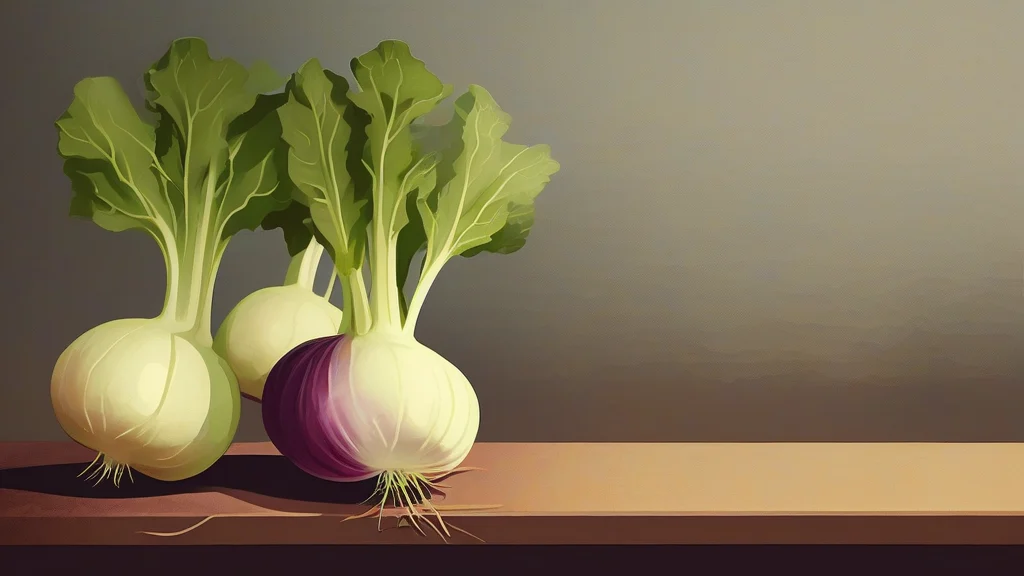
What does kohlrabi mean?
Kohlrabi is a vegetable with a rounded, bulbous stem that looks somewhat like a turnip, although it belongs to the same broad family as cabbages, broccoli, and other brassicas. The tender young leaves can be eaten, but the enlarged stem is the usual part consumed. Its flavor is mild and slightly sweet, making it suitable for boiling, roasting, frying, or grating into salads and slaws. The vegetable is especially associated with European and Central European cooking, though it is now available in many markets worldwide. Kohlrabi is unusual among vegetables because its enlarged edible structure is primarily the swollen stem rather than a root, leaf, or flower head. Its name combines German terms referring to cabbage and turnip, reflecting both its appearance and its botanical associations.
nounA European plant of the cabbage family, cultivated for its swollen, edible stem, which resembles a turnip. The tender young stems may also be eaten as greens.
- The swollen, edible stem of a European brassica plant, eaten cooked or raw.
- The plant cultivated for its edible stem.
"Roasted kohlrabi with lemon and herbs made an elegant side dish."
"She sliced the kohlrabi thinly and added it to the salad."
"Kohlrabi grows well in cool conditions and is often used in summer slaw."
Kohlrabis is the standard plural, though kohlrabi can also be used without a plural ending in general or culinary contexts.
"The market had bunches of kohlrabi and several kinds of winter squash."
Despite its turnip-like shape and cabbage-like leaves, kohlrabi is named from German words for both.
Reviewed by Deb Chak, Editor. AI-assisted content curated by RJS Tech Solutions LLP.
Where does kohlrabi come from?
The word kohlrabi entered English from German, where it was formed from Kohl, meaning cabbage, and Rabe, an older German term for turnip. The turnip element ultimately comes from Latin rapa. The modern German form eventually became established as kohlrabi, and the vegetable was introduced to English-speaking countries in the 19th century.
How kohlrabi is actually used
Usually treated as an uncommon vegetable in contemporary English. British speakers may encounter it more often in Continental-style dishes, while it is also familiar in parts of the United States.