
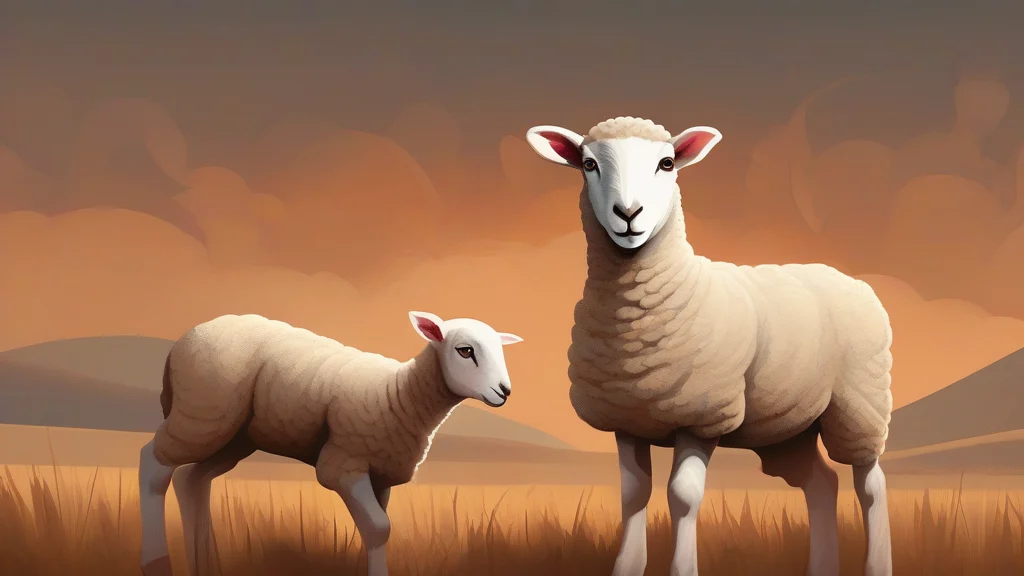
What does lamb mean?
Lamb most commonly denotes a young sheep, a term used especially for a sheep less than about a year old. It also names the meat of a sheep, with “spring lamb” referring to the flesh of young sheep and “lamb chops” identifying a familiar cut. In figurative writing, a lamb can be a meek, innocent, gentle, or easily exploited person, as suggested by comparisons to a “lamb to the slaughter.” The related verb means to give birth to lambs and is used chiefly in agricultural contexts. The word is familiar in British and American English and appears in both practical cooking language and traditional imagery. Its associations range from tenderness and youthful innocence to food, sacrifice, and vulnerability. As a verb, “lamb” is less common than the noun but remains standard in descriptions of sheep farming.
A young sheep, especially one less than a year old; also, the flesh of a sheep used as food.
"The farmer welcomed a healthy lamb born during the night."
The meat sense is common in cooking and food contexts.
To give birth to lambs.
"The ewe lambed in the shelter of the barn."
Chiefly used in sheep-farming and agricultural contexts.
The standard plural of lamb as a noun.
"Several lambs grazed beside the stone wall."
Lamb carries two memorable associations: the gentleness of a young sheep and the unmistakable centerpiece of a British roast dinner.
Reviewed by Deb Chak, Editor. AI-assisted content curated by RJS Tech Solutions LLP.
Where does lamb come from?
The word descends from Old English lamb, which came from Proto-Germanic *lambaz. It belongs to a Germanic family that includes German Lamm, Dutch lam, Danish lamb, Swedish lamb, and Icelandic lamb. The animal sense is primary historically, while the use of the word for the meat of a sheep developed in culinary contexts.
Related word forms
How lamb is actually used
Lamb is a neutral, everyday word for the animal and its meat. The figurative sense is literary and often gently ironic, while the verb is relatively uncommon and mainly associated with sheep farming.
Easily confused with lamb
Lamb is a young sheep or its meat, whereas lam appears chiefly in the informal phrase 'on the lam,' meaning in escape from the law.