
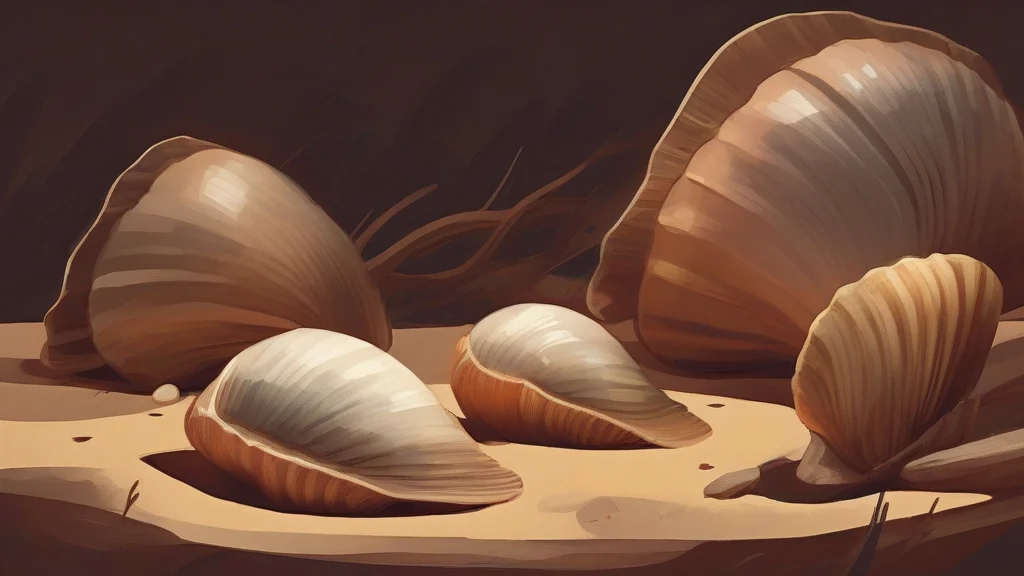
What does lamellibranch mean?
A lamellibranch is a mollusc with a shell divided into two hinged valves, the defining feature of the group that includes clams, mussels, oysters, and scallops. The word belongs primarily to zoological and taxonomic vocabulary and is more specialized than the common term bivalve. It can consequently sound formal or historical, especially in older natural-history writing and scientific classifications. A lamellibranch's two-part shell protects the animal while allowing water to pass over its gills for feeding and respiration. The term is also more exact than the broader word shellfish, which can include crustaceans and gastropods as well as bivalves. Although specialized, lamellibranch remains useful when discussing this biological group, its characteristic shell structure, or the history of zoological classification. Its unusual name also preserves an older descriptive approach to molluscan anatomy, particularly the arrangement of the gills.
nounA lamellibranch is a bivalve mollusc—a mollusc whose shell consists of two hinged valves, such as a clam, mussel, oyster, or scallop. The term is chiefly used in zoology and taxonomy and is largely formal.
- A bivalve mollusc, especially a clam, mussel, oyster, or scallop.
"The museum's collection includes shells from a number of marine lamellibranchs."
"The fossil bed contains shells from several marine lamellibranchs."
"In older zoological texts, the lamellibranch was classified separately from the gastropod."
The regular plural is lamellibranchs.
"Researchers studied lamellibranchs in the estuary."
A lamellibranch carries its armor in two hinged halves—an efficient design that helped clams, oysters, mussels, and scallops thrive.
Reviewed by Deb Chak, Editor. AI-assisted content curated by RJS Tech Solutions LLP.
Where does lamellibranch come from?
The word comes from New Latin Lamellibranchia, a taxonomic name formed from Latin lamella, meaning a small thin plate or leaf, and branchia, from Greek bránkhia, meaning gills. The compound refers to the plate-like gill structure characteristic of these molluscs. Its English form reflects the formal zoological terminology developed during the 19th century.
How lamellibranch is actually used
Formal and taxonomic rather than everyday. In contemporary biological writing, bivalve is often the more natural general term; older literature may use lamellibranch for a classification that modern taxonomies treat differently.