
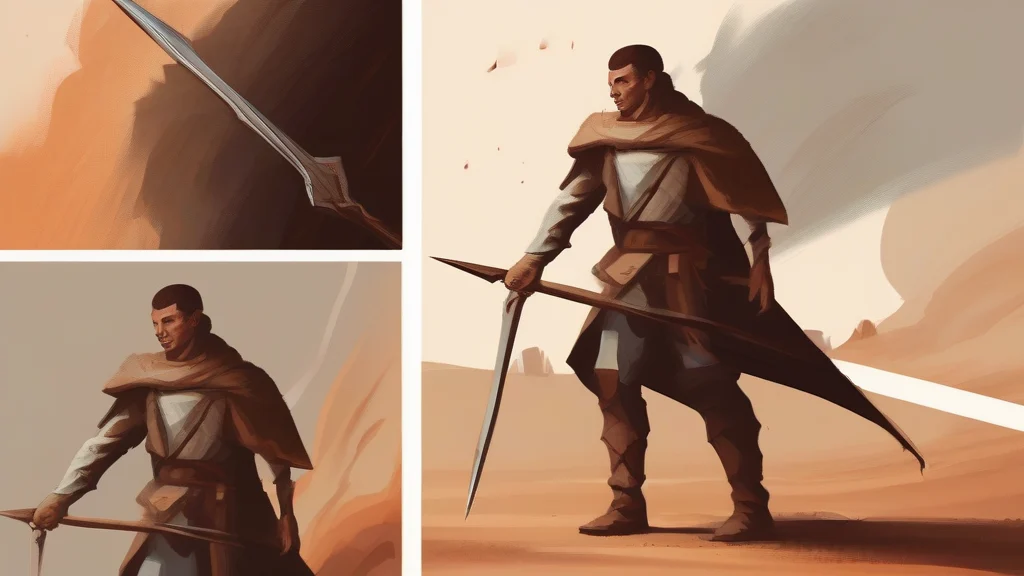
What does lance mean?
A lance is a long, spear-like weapon that was especially associated with mounted soldiers and medieval warfare. The word also functions as a verb: to lance something is to pierce it with a lance, while a person or object may lance or move suddenly and sharply through a space. In modern English, the noun is most often encountered in historical, literary, ceremonial, or military contexts, including references to jousting, cavalry, and the lance corporal. The word carries connotations of force, skill, speed, and disciplined combat. Although closely related historically to other spear words and to launch, lance now has a distinctive identity. Its combination of a concrete weapon and a vivid verb makes it useful in both historical description and energetic prose, while also giving it a slightly formal or dramatic tone.
A long spear-like weapon, especially one carried by a mounted soldier or used in jousting.
"The lance made a bright arc as the rider urged his horse forward."
The noun is chiefly historical or literary today and is strongly associated with cavalry and jousting.
To pierce with a lance, or to move suddenly and quickly.
"The warrior lanced the target before the opponent could respond."
The verb can be used literally for a thrust with a lance and figuratively for sudden, sharp movement.
The plural lances is used for multiple weapons or, in figurative contexts, multiple instances of sudden movement.
"Several lances rose above the crowd as the procession entered the square."
A lance was more than a spear: it was a weapon of war, a symbol of military rank, and part of the age of cavalry.
Reviewed by Deb Chak, Editor. AI-assisted content curated by RJS Tech Solutions LLP.
Where does lance come from?
The word entered Middle English from Old French lance, ultimately from Latin lancea, the Latin word for a spear or lance. The deeper origin of Latin lancea is uncertain, although it is often connected with a pre-Roman Celtic or Gaulish source. Related forms include lancet, lanceolate, launch, and the Spanish lanza, all reflecting the same broad historical family of spear-related words.
Related word forms
How lance is actually used
As a noun, lance is chiefly historical or literary, though it remains common in discussions of medieval warfare, jousting, and military traditions. As a verb, it can sound deliberately vivid or dramatic, as in a description of a fast-moving attack or a forceful gesture.
Easily confused with lance
A lance is a spear-like weapon or an action involving sudden movement, whereas a lens is a curved piece of transparent material used to focus light.