
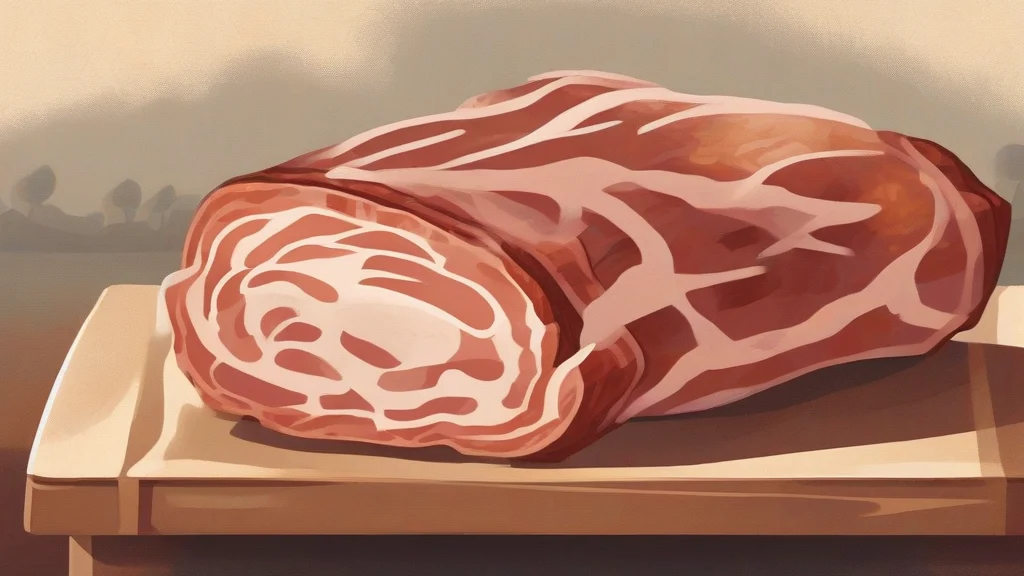
What does lardon mean?
A lardon is a thick slice of bacon, usually one with a noticeable strip of fat. It is used in savory cooking to add richness, saltiness, and a lightly smoky flavor to soups, beans, vegetables, and other dishes. The term is particularly familiar in British and European-style cookery and is often associated with French-influenced cuisine. Lardons are commonly cooked until crisp or rendered, then combined with aromatic ingredients such as onions, leeks, garlic, and herbs. Although a lardon is a piece of bacon rather than a form of pure fat, it is valued for its fat as well as its meat. The word can therefore convey rustic, hearty cooking while also lending a more polished or professional tone to a recipe.
nounA thick slice of bacon, especially one containing a substantial amount of fat. In French cooking, a lardon may also refer to a small piece of fatty meat used to flavor dishes.
- A thick slice of bacon, particularly one with a strip of fat through it.
"The beans simmered slowly with onion, thyme, and a smoky lardon."
"She crisped the lardons in a hot pan before adding the beans."
"The chef served the soup topped with a golden lardon and a sprig of parsley."
The regular plural is used for individual pieces of bacon or fatty meat.
"The recipe calls for two smoked lardons, chopped into small pieces."
A lardon is to bacon what a rib is to steak: a cut with a rich, satisfying amount of its characteristic ingredient.
Reviewed by Deb Chak, Editor. AI-assisted content curated by RJS Tech Solutions LLP.
Where does lardon come from?
The English word entered from French lardon, a diminutive of larde, meaning a strip or piece of fat. Larde itself comes from Latin lardum, “pieces of bacon,” a term associated with Roman cooking. The English words lard and larder developed through related French forms connected with preserving meat in fat.
How lardon is actually used
The word is common in British and European-style cooking, especially in French-influenced cookery. It can sound more refined or restaurant-oriented than the plain phrase “slice of bacon,” and in French culinary usage it may denote a small piece of fatty meat rather than bacon specifically.
Easily confused with lardon
Lard is rendered animal fat, whereas a lardon is a solid piece or slice of bacon, usually with some meat attached.