
What does lark mean?
Lark has two quite different lives. The best-known sense is a small songbird in the lark family, Alaudidae, whose melodious song is especially associated with open country. In informal British usage, however, a lark is a piece of fun, a mischievous escapade, or a joke played at someone's expense. As a verb, to lark means to behave playfully or, in transitive uses, to fool or prank someone. The playful meanings are informal, and exclamatory uses can sound teasing rather than wholly serious. The word is also an excellent example of how a common noun can develop vivid figurative meanings from a cheerful source. In its oldest sense, however, it is simply the bird: the English form is inherited from Old English and remains remarkably recognizable after more than a thousand years.
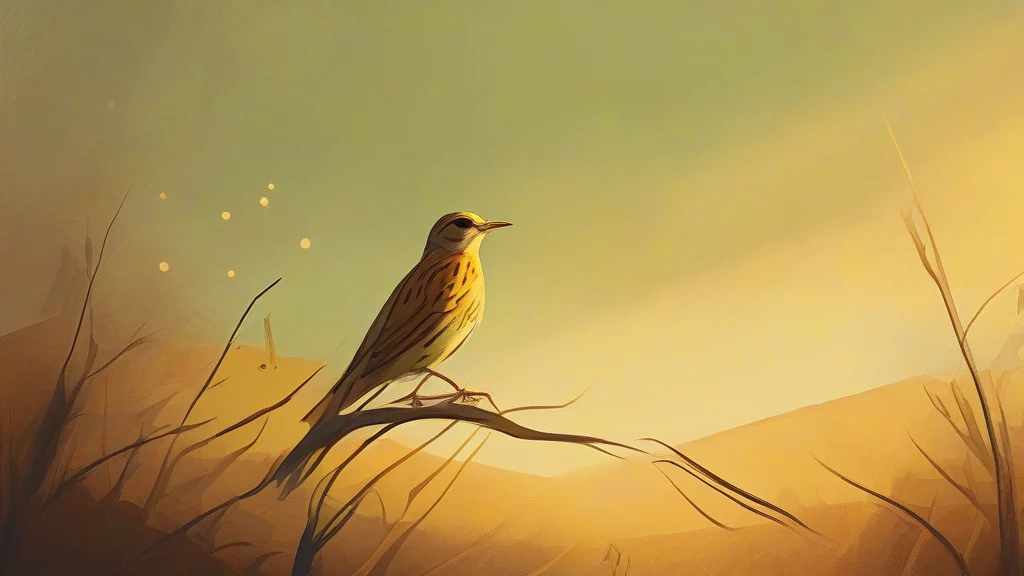
As a noun, a lark is a small songbird of the family Alaudidae. Informally, it can mean a fun or mischievous escapade or a prank.
"They set off early because the fishing trip was to be a lark."
To lark means to behave playfully or mischievous; it can also mean to fool or prank someone.
"They were always larking about in the meadow."
The playful sense is informal and especially associated with British English.
The regular plural is used when referring to multiple birds. The figurative senses are normally singular or uncountable in modern usage.
"Larks rose from the fields as the sun came up."
Lark is an Old English survivor: the bird's name has remained remarkably recognizable for more than a thousand years.
Reviewed by Deb Chak, Editor. AI-assisted content curated by RJS Tech Solutions LLP.
Where does lark come from?
The bird word comes from Old English lark and is inherited from Proto-Germanic *larkō; related cognates include German Lerche, Swedish lärka, and Danish lærke. By the early nineteenth century, English also used the word for amusement or mischief, although the precise origin of this figurative development is uncertain. The related verb developed alongside these playful noun meanings.
Related word forms
How lark is actually used
The senses involving fun, mischief, or pranks are informal. The verb is especially familiar in British English, particularly in the expression “lark about,” while the literal bird sense is standard in formal writing.