What does latticing mean?
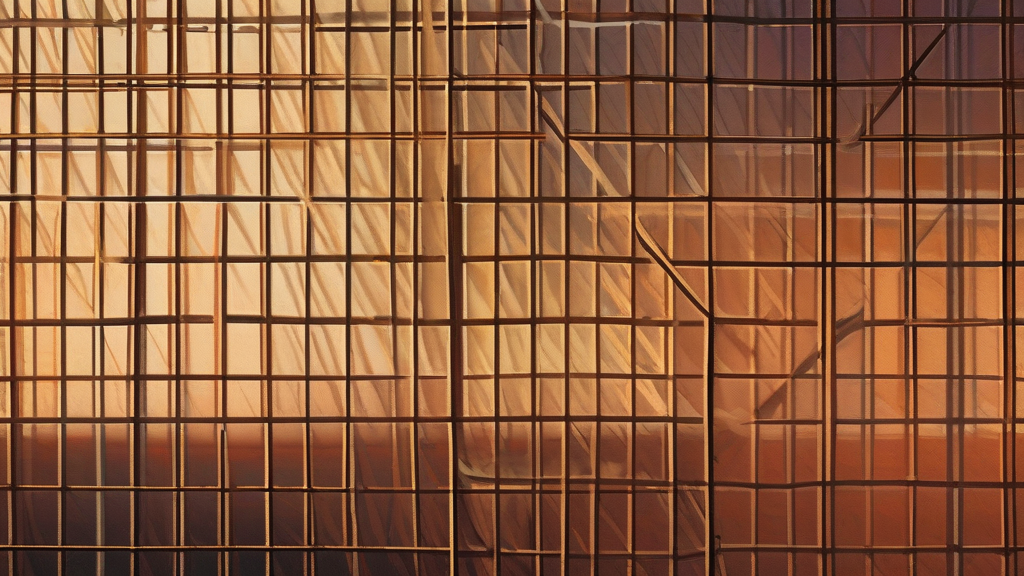
Latticing refers to the act of covering or decorating a surface with a lattice, typically a decorative one. This can be achieved through various materials, such as wood, metal, or even fabric. The term is often used in architecture and design to describe the creation of intricate patterns or designs. Latticing can also imply a sense of delicacy or intricacy, as seen in the use of latticed windows or roofs. While the term is primarily associated with visual arts, it can also be used in other contexts, such as music or literature, to describe complex or intricate structures. Overall, latticing is a versatile term that encompasses a range of creative and technical applications.
verbTo cover or decorate with a lattice, especially a decorative one, or to form a lattice-like pattern.
- To cover or decorate with a lattice, especially a decorative one, or to form a lattice-like pattern.
"The artist latticed the windows with intricate wooden patterns."
"The artist latticed the windows with intricate wooden patterns."
"The architect designed a latticed roof to allow natural light to filter in."
The plural form latticings is used to describe multiple instances of latticing, such as in the phrase 'the latticings on the windows were intricate.'
"The architect designed multiple latticings for the roof to allow natural light to filter in."
Reviewed by Deb Chak, Editor. AI-assisted content curated by RJS Tech Solutions LLP.
Etymology of latticing
The word latticing is derived from the noun lattice, which refers to a framework of crossed ribs or bars, typically used for decorative or functional purposes. The term lattice itself is thought to have originated from the Latin word 'latticium', meaning 'net' or 'mesh'. The verb form latticing emerged in the 17th century, initially used in the context of architecture and design. Over time, the term has expanded to encompass a broader range of creative and technical applications.
How latticing is actually used
In architecture and design, latticing is often used to create decorative or functional patterns. The term can also imply a sense of delicacy or intricacy.