
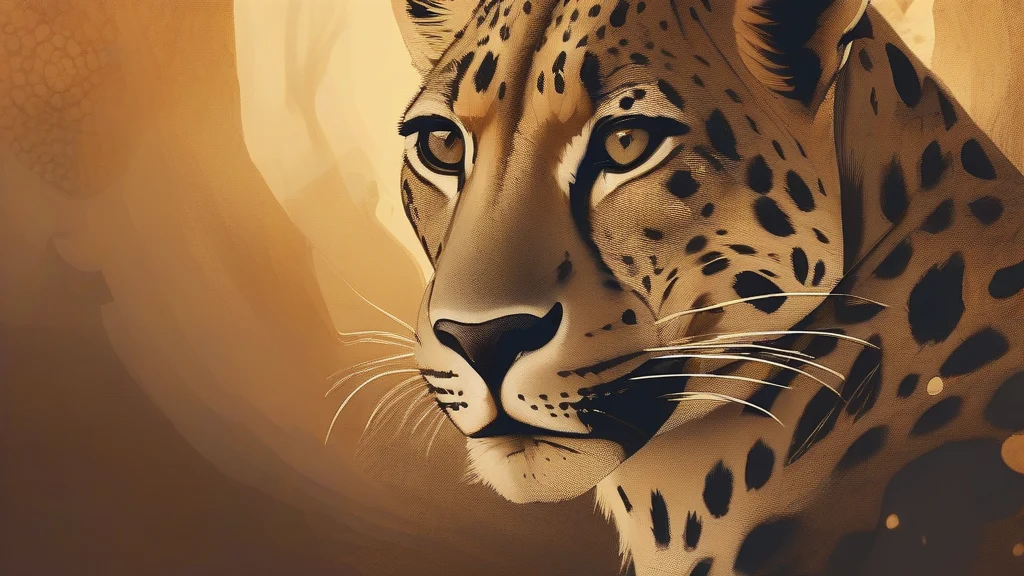
What does leopardess mean?
A leopardess is a female leopard, the female counterpart of the familiar general term “leopard.” The word is used especially in zoology, wildlife conservation, natural-history writing, and literature. It refers to an adult female of the species Panthera pardus, a large cat native to Africa and Asia. Because “leopard” does not formally mark grammatical gender, “leopardess” provides a specific name when the sex of the animal matters. In descriptive writing, the term often highlights traits associated with female big cats, such as hunting, territorial behavior, and, in some species, protective care of cubs. It is less common than “leopard” and should generally be reserved for contexts where the animal’s sex is relevant.
nounA female leopard. The term is the feminine counterpart of “leopard” and is used in zoological, wildlife, and literary contexts.
- A female leopard.
"The leopardess moved silently through the tall grass, watching the herd."
"A leopardess guarded her den while her cubs hunted nearby."
"The documentary described the leopardess as a solitary and highly adaptable hunter."
The standard plural adds “-es” to the final “-ess.”
"Researchers identified two leopardesses in the protected area."
Leopardesses are among the most powerful big cats in the world, yet the word’s distinctly marked female form also reflects a long tradition of calling the male animal simply by the general name.
Reviewed by Deb Chak, Editor. AI-assisted content curated by RJS Tech Solutions LLP.
Where does leopardess come from?
“Leopardess” was formed in the early 19th century by adding the feminine suffix “-ess” to “leopard.” The base word “leopard” comes through Old French from Latin leopardus, from Greek leopardos, referring to a spotted big cat. The suffix “-ess” is an English word-forming element that creates a feminine noun, as in “hostess” and “authoress,” though many such forms have fallen out of general use. “Leopardess” has survived because zoological and literary contexts often require a precise term for a female animal.
How leopardess is actually used
Leopardess is uncommon in everyday speech but standard in zoological and wildlife writing. It is the conventional feminine form corresponding to “leopard,” rather than a separate term for a different species.