
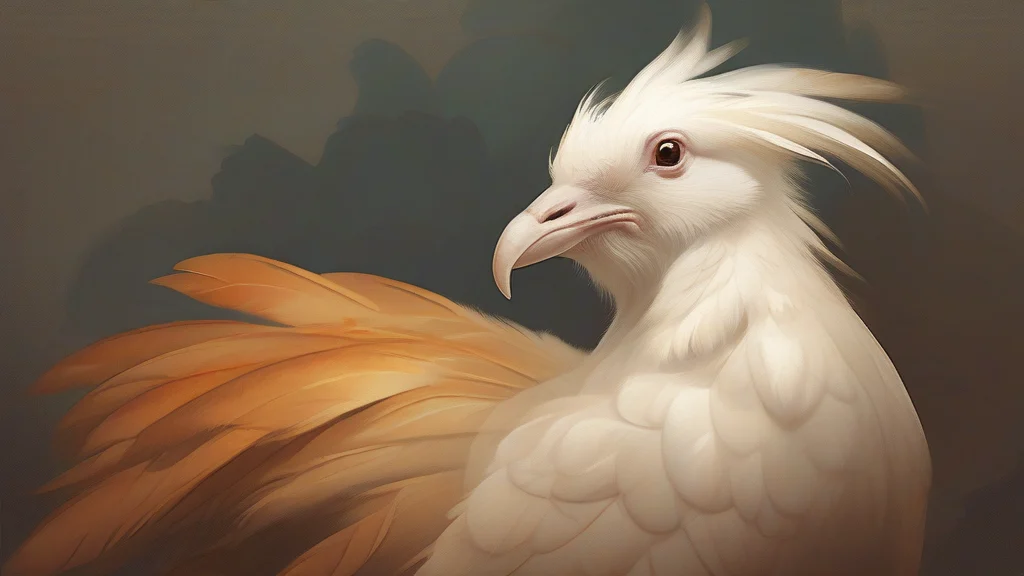
What does leucism mean?
Leucism is a condition affecting pigmentation in animals and plants. It causes areas of the skin, fur, feathers, scales, or other normally colored tissues to appear white, pale, or unusually light because pigment production is reduced, absent, or unevenly distributed. The condition can be inherited or arise during development, and its effects vary widely: some animals have only small pale patches, while others are almost entirely white. Leucism is often confused with albinism, but the distinction is important. In albinism, the body produces little or no melanin, commonly affecting the eyes as well as the skin or coat. With leucism, pigment may remain in the eyes and other features, and the condition can involve either a genetic mechanism or a localized failure of pigment-cell development. The word is especially associated with rare white animals, including birds, reptiles, mammals, and fish, though it is also used in botanical and biological contexts.
nounA condition in which an animal or plant has reduced or absent pigmentation, resulting in white, pale, or unusually light coloring. It differs from albinism in that the eyes and other features may retain normal coloration.
- A condition of reduced or absent pigmentation in an animal or plant, producing white, pale, or patchy coloration.
"The rare leucism affecting the fox gave it a striking white coat while its eyes remained dark."
"Researchers identified leucism as the cause of the unusually white feathers of the bird."
"Some forms of leucism are inherited, while others result from developmental changes in pigment-producing cells."
Plural usage is uncommon in ordinary writing but is grammatically regular; the word is normally used in the singular in scientific descriptions.
"The study described several forms of leucism in wild birds."
Leucism can turn an animal white without making its eyes pink: the missing pigment may affect only the coat, skin, or feathers.
Reviewed by Deb Chak, Editor. AI-assisted content curated by RJS Tech Solutions LLP.
Where does leucism come from?
The word is formed from Greek leukos, meaning “white,” together with the suffix -ism, which forms a noun indicating a condition or state. The resulting term refers to a condition characterized by unusual whiteness or pallor caused by altered pigmentation. Its English use belongs to the scientific vocabulary developed in the nineteenth century, when zoology and biology increasingly described inherited and developmental variations in coloration.
Related word forms
How leucism is actually used
This is chiefly a technical term in zoology, botany, and genetics. In animal coloration, it is often distinguished from albinism because leucism does not necessarily eliminate pigment from the eyes.
Easily confused with leucism
Albinism is a genetic condition involving little or no melanin throughout the body, often affecting the eyes, whereas leucism refers more broadly to reduced or patchy pigmentation and may leave normal coloring in some areas.