
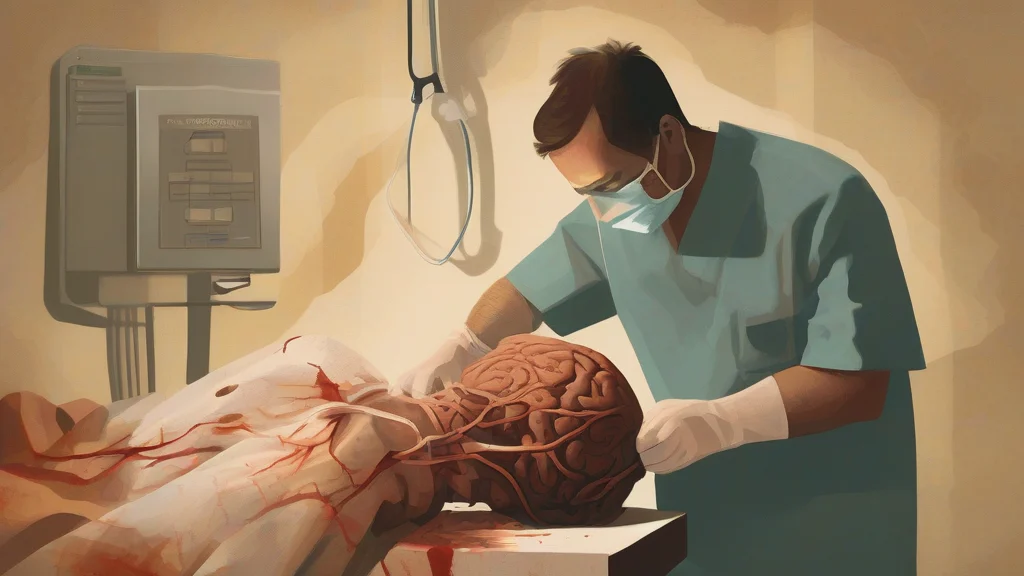
What does leucotomy mean?
Leucotomy is a historical surgical procedure involving the cutting of white matter in the brain, particularly in the frontal lobes. It was developed in the early 20th century as a treatment for severe psychiatric disorders when effective medication was limited, and it sometimes brought dramatic changes in agitation or distress. However, the operation could also cause profound and lasting damage, including personality changes, memory problems, impaired judgment, seizures, and incontinence. As its risks became widely recognized and more effective psychiatric treatments emerged, leucotomy fell out of accepted clinical practice. Today, the word is chiefly encountered in medical history and discussions of psychosurgery. It is sometimes confused with lobotomy, but leucotomy is more specifically associated with surgically severing white-matter connections in the frontal brain.
nounLeucotomy is the surgical cutting of white matter in the brain, especially the frontal lobes, to alter behaviour or mental function. It is a historical form of psychosurgery, now largely abandoned because of the risk of severe cognitive and personality changes.
- The surgical operation of cutting white matter in the brain, especially the frontal lobes, to alter behaviour or mental function.
"The patient underwent a frontal leucotomy in an era when psychosurgery was still widely used to treat severe mental illness."
"Early psychiatrists sometimes used frontal leucotomy to treat severe anxiety, depression, or obsessive-compulsive symptoms."
"Historical reports of leucotomy described substantial personality changes alongside improvements in some patients' symptoms."
Used when referring to multiple instances of the operation or procedure.
"The medical archive documented several leucotomies performed at the hospital during the 1950s."
Leucotomy belongs to the history of psychosurgery, a once-promising treatment whose dramatic risks eventually made it largely obsolete.
Reviewed by Deb Chak, Editor. AI-assisted content curated by RJS Tech Solutions LLP.
Where does leucotomy come from?
Leucotomy combines the combining form leuk-, derived from Greek leukos, meaning “white,” with -tomy, derived from Greek tome, meaning “cutting.” The name reflects the operation's target: white matter within the brain. Its development was part of the 20th-century history of psychosurgery, before modern assessments of its risks led to its decline.
How leucotomy is actually used
The term is mainly historical and technical. It is encountered in the history of psychiatry and medicine, but modern treatment practice has abandoned it because of serious risks including cognitive impairment, personality disturbance, seizures, and incontinence.
Easily confused with leucotomy
Lobotomy is the broader term for surgery that severs or disrupts brain tissue, while leucotomy more specifically refers to cutting white matter in the frontal region.