
What does lidded mean?
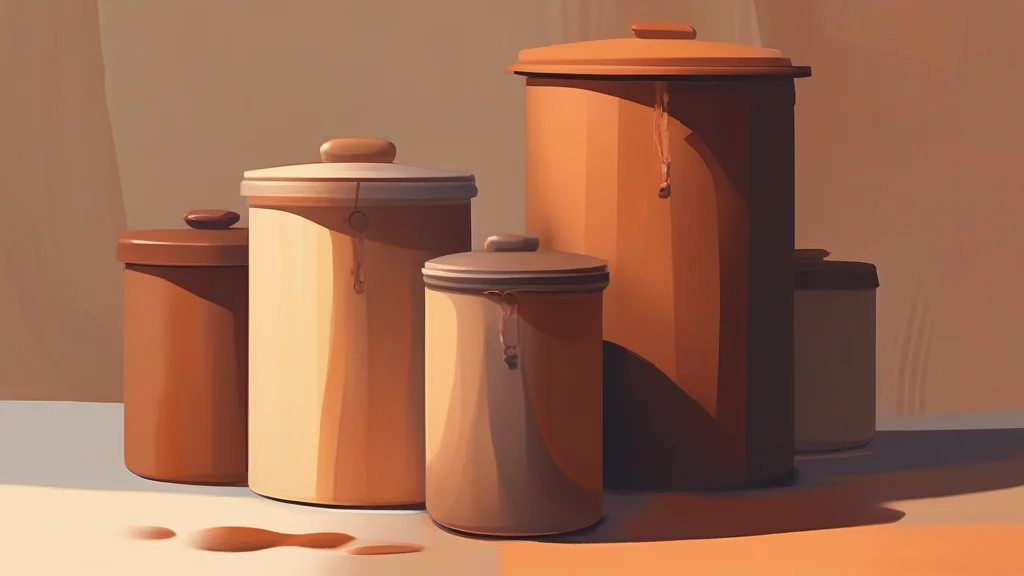
Lidded is an adjective describing something that has a lid or cover. It is especially common when discussing food and storage containers, as in a lidded jar, a lidded pot, or a lidded bin, and it often emphasizes the presence of a cover rather than whether that cover is open or closed. The word can also describe eyes: lidded eyes have visible eyelids and may appear partly closed, heavy, or drowsy. This use is more literary and figurative than the ordinary description of an object with a lid. Lidded is the past participle and adjective form of lid, and it is used in both British and American English. It is a useful descriptive word because it identifies a particular physical feature without making a detailed claim about the object’s exact design.
Having a lid or cover; fitted with one.
"Store the jam in a lidded jar once it has cooled."
The expression is especially common in descriptions of household and food-storage containers.
Having eyelids, especially partly closed or heavy-looking ones.
"He answered with a sleepy, lidded gaze."
This sense is literary and often conveys drowsiness, softness, or a lowered gaze.
From Old English hlid, meaning a cover or opening, the word lidded carries the history of the everyday object that seals, stores, or conceals what lies beneath.
Reviewed by Deb Chak, Editor. AI-assisted content curated by RJS Tech Solutions LLP.
Where does lidded come from?
Lidded derives from the noun lid. The word lid comes from Old English hlid, which referred to a cover or opening and is related to an older Germanic sense of a gate or hatch. The modern meaning of a removable or hinged cover developed over time, while the adjective lidded was formed by adding the usual -ed participial ending to lid.
How lidded is actually used
Common in descriptive writing, especially for containers, jars, pots, and bins. In the expression lidded eyes, it is usually somewhat literary and can suggest drowsiness, softness, or a deliberately lowered gaze.
Easily confused with lidded
A lidded object has a removable or fixed cover, whereas a lidless object has no such cover.