
What does lightening mean?
Lightening most commonly means the process of making something less heavy, burdensome, or severe. The word is also used when a situation, atmosphere, or colour becomes brighter or less tense, as in a phrase about lightening the mood. Grammatically, it is the present participle and gerund of lighten, so it can describe an action in progress or a general activity. It should not be confused with lightning, the electrical phenomenon associated with thunderstorms. An older, archaic use of lightening as a direct spelling of lightning survives in British English but is uncommon today. The modern verb sense is readily understood and useful because it describes both literal reductions in weight and figurative reductions in difficulty, severity, or emotional tension.
To make something less heavy, severe, or intense, or to become lighter, brighter, or less tense.
"The editor worked to lighten the report without reducing its important details."
This is the present participle and gerund of lighten; it also has a figurative meaning relating to reduced severity or tension.
An archaic alternative spelling of lightning.
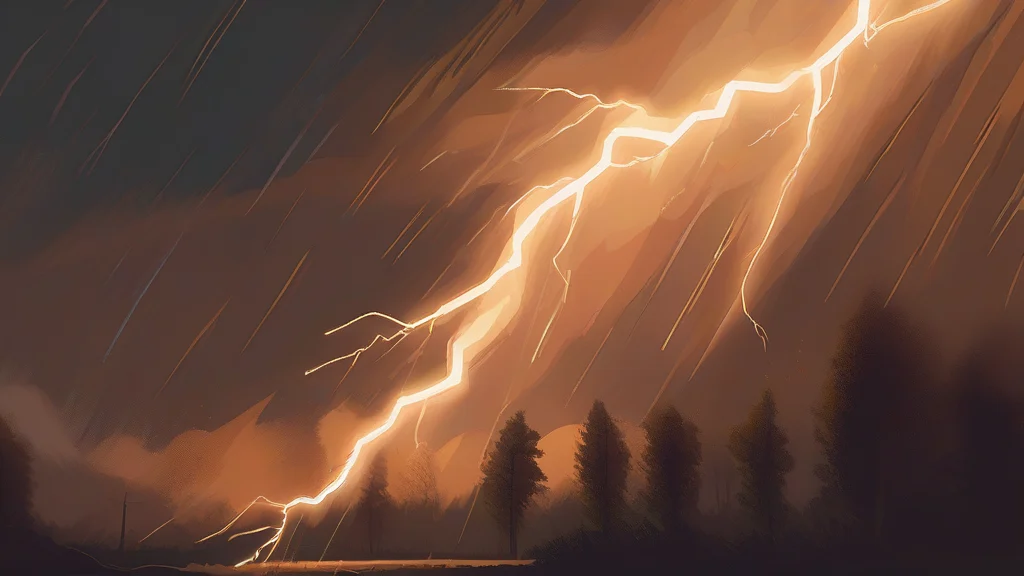
"A flash of lightening lit the dark hills."
This noun sense is archaic and chiefly associated with British English; lightning is now standard.
The archaic noun sense is normally uncountable, like modern lightning.
"The distant lightening illuminated the horizon."
One stray letter can turn a thunderstorm into a weight-loss plan: lightning flashes, while lightening makes things lighter.
Reviewed by Deb Chak, Editor. AI-assisted content curated by RJS Tech Solutions LLP.
Where does lightening come from?
As a verb form, lightening is derived from lighten, which was formed from the adjective light and the suffix -en. The adjective light descends from Old English lēoht and has cognates in other Germanic languages, while levity reflects the related Latin root levis, meaning light or weightless. The separate, archaic noun use is an older English spelling of lightning and is no longer part of standard modern usage.
Related word forms
How lightening is actually used
As a verb form, lightening is standard in modern British and American English. Its separate noun use as a historical spelling of lightning is archaic and chiefly associated with British English.
Easily confused with lightening
Lightening means making something less heavy or severe, whereas lightning is the electrical discharge that accompanies a thunderstorm.