
What does lithographer mean?
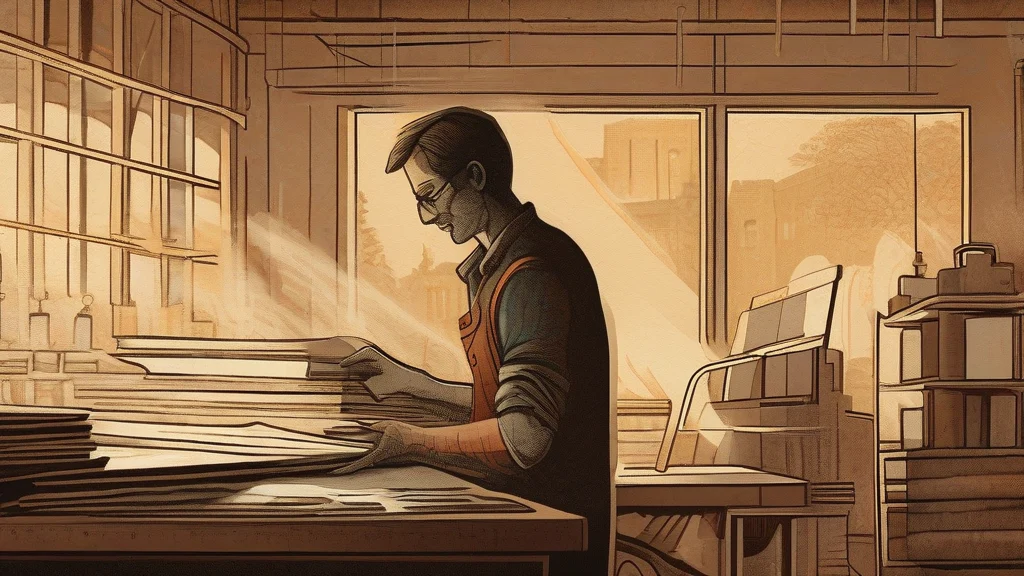
A lithographer is an artist who makes prints through lithography, a printmaking process based on the fact that oil-based ink and water do not mix. In traditional lithography, the artist draws an image on a prepared limestone surface, treating the areas to remain blank with an oily, hydrophobic substance. When the surface is dampened and inked, the ink adheres to the drawn image but is repelled by the wet areas, allowing the design to be transferred to paper. The technique was especially important to nineteenth-century artists because it allowed images to be drawn freely and reproduced in multiple impressions. A lithographer may both create the original drawing and oversee its printing, although modern production can involve separate artists, printers, and publishers. The word is also used more broadly for a person associated with lithographic printing or the production of lithographs.
nounA lithographer is an artist who makes prints using lithography, a process in which an image is drawn on a prepared stone or other flat surface and transferred to paper.
- An artist who produces prints through lithography.
"The renowned lithographer produced portraits of musicians and writers throughout his career."
"The exhibition featured works by several leading lithographers of the nineteenth century."
"She trained as a lithographer and later combined printmaking with painting."
The regular plural is used when referring to more than one artist who works in lithography.
"The gallery represents lithographers from several European countries."
A traditional lithographer could create thousands of impressions from the same drawing on limestone, helping turn printing into a genuinely reproducible art form.
Reviewed by Deb Chak, Editor. AI-assisted content curated by RJS Tech Solutions LLP.
Where does lithographer come from?
The word comes from French lithographe, which was formed from Greek lithos, meaning “stone,” and graphein, meaning “to write.” The technique was developed in the late eighteenth century by Alois Senefelder, whose work established the process of drawing with a greasy crayon on limestone and printing from the prepared stone. The English term lithography and the related word lithograph developed from the same root.
Related word forms
How lithographer is actually used
The term is primarily used for an artist who works in lithography. It is sometimes used more broadly for someone involved in the production of lithographic prints.
Easily confused with lithographer
A lithographer prints from a flat surface using the principle that oil and water repel one another, whereas an engraver cuts or scratches an image into a hard surface.