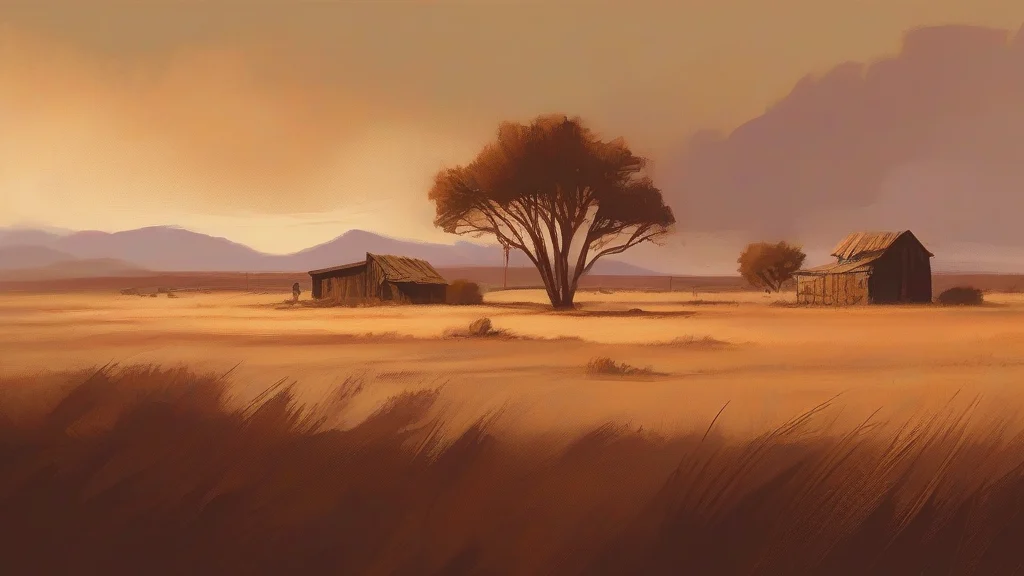
What does llano mean?
A llano is a type of flat, grassy plain or grassland commonly found in the southwestern United States and northern Mexico. Characterized by its open spaces and often floodable terrain, the llano provides habitat for a variety of plant and animal species. The term is often used in geographical and ecological contexts to describe specific ecosystems or landscapes. Llano areas can be vast, stretching as far as the eye can see, or smaller, dotting the landscape like patches of green. Understanding the llano and its unique characteristics is essential for appreciating the diversity of landscapes in the American Southwest.
nounA type of flat, grassy, and often floodable plain or grassland, typically found in the southwestern United States and northern Mexico.
- A type of flat, grassy plain or grassland.
- A region or area characterized by such plains or grasslands.
"The rancher's cattle grazed freely on the llano, a vast expanse of open grassland."
"The llano stretched as far as the eye could see, a seemingly endless sea of green."
"The Texas Hill Country is dotted with small llano areas, providing habitat for a variety of wildlife."
The plural form 'llanos' is used to refer to multiple areas or regions characterized by flat, grassy plains or grasslands.
"The region is dotted with several llanos, each providing a unique habitat for wildlife."
Reviewed by Deb Chak, Editor. AI-assisted content curated by RJS Tech Solutions LLP.
Etymology of llano
The word 'llano' originates from the Spanish language, in which it means 'plain' or 'flat'. It is derived from the Latin word 'planus', meaning 'flat' or 'level'. The term has been adopted into English to describe specific types of geographical features, particularly in the southwestern United States and northern Mexico.
How llano is actually used
The term 'llano' is often used in the context of geography and ecology to describe specific types of ecosystems or landscapes. It may also be used more broadly to refer to any flat or grassy area.