
What does locust mean?
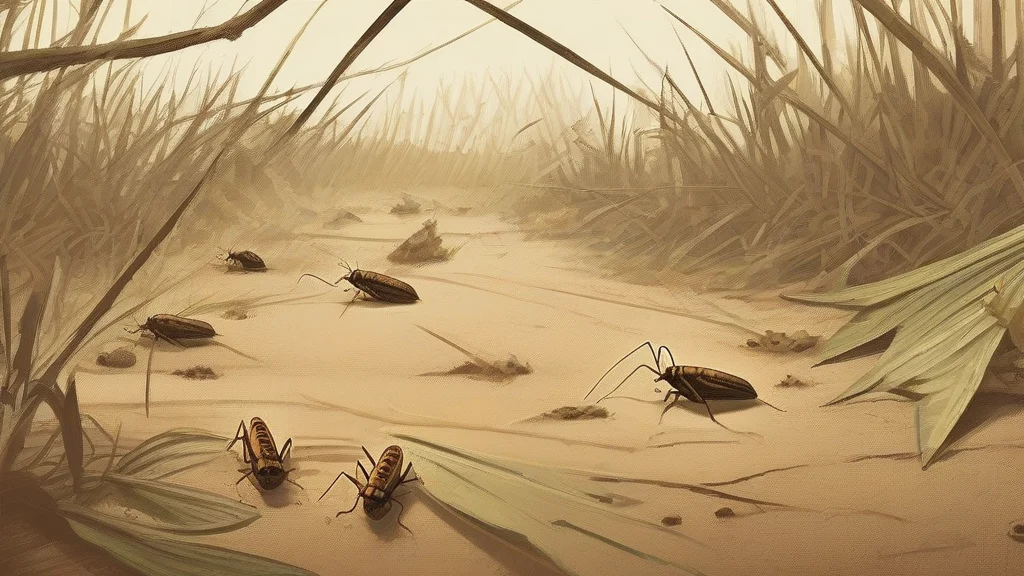
A locust is a type of grasshopper noted for forming dense, sometimes enormous swarms. When populations remain scattered, locusts can resemble ordinary grasshoppers; under certain conditions, however, they gather into groups that migrate over long distances and consume crops and vegetation, creating serious agricultural damage. The word is consequently associated with both entomology and images of overwhelming, destructive abundance. In figurative use, a locust can describe a person or group portrayed as greedily taking whatever resources are available. Although locusts occur naturally in many parts of the world, reports of swarms are especially associated with regions where they can threaten agriculture. The term is also familiar from literary and religious imagery, where it symbolizes sudden, devastating destruction.
nounA large, short-horned grasshopper that can form dense, migrating swarms and damage crops. The word may also refer figuratively to a person or group that consumes or exhausts resources.
- A large, short-horned grasshopper, especially one that forms dense migrating swarms and can severely damage crops.
- A person or group likened to a swarming locust because of its destructive or rapacious consumption of resources.
"A swarm of locusts darkened the sky as it crossed the fields."
"Farmers used several methods to protect their crops from locusts."
"The invaders were described as locusts because they stripped every region they entered."
The plural locusts is standard for multiple insects and is especially common when referring to a destructive swarm collectively.
"Locusts consumed the millet fields within days."
A single locust is an ordinary grasshopper; a group of them can become a moving agricultural disaster.
Reviewed by Deb Chak, Editor. AI-assisted content curated by RJS Tech Solutions LLP.
Where does locust come from?
The English word locust comes through Old French from Latin locusta, the Latin name for the insect. Its development is linked to the long-established idea of locusts appearing in vast swarms. The name was also extended figuratively to people regarded as destructive or excessively greedy.
How locust is actually used
The word is usually used for grasshoppers that gather in swarms, particularly in descriptions of crop damage in Africa, Asia, and the Americas. The figurative sense is strongly negative and suggests greedy, destructive consumption. In the singular, a locust is an individual insect; in the plural, the form is commonly used for the swarming insects collectively.
Easily confused with locust
A locust is a particular kind of grasshopper that may form dense, destructive swarms, whereas not every grasshopper has this behaviour.