
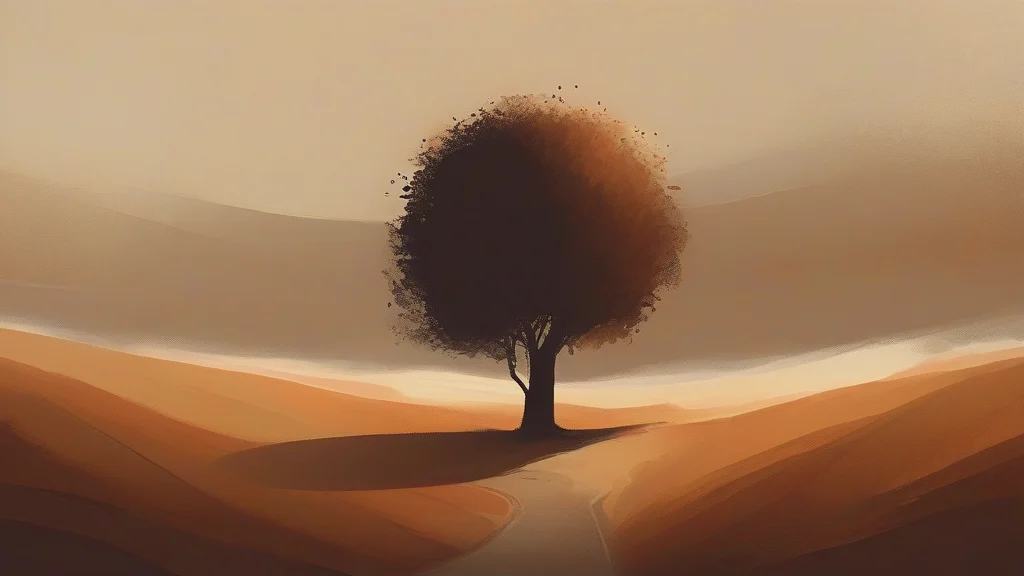
What does longing mean?
Longing describes a powerful desire that is often intensified by absence, distance, or uncertainty. It can apply to a person, place, experience, or period of life, as in a longing for home, freedom, or a former happiness. The word is more emotionally charged than simple desire: it suggests yearning, tenderness, and a sense that something valued is missing or out of reach. Although it can be used in everyday conversation, it is especially common in poetry, literature, song, and reflective speech, where its associations with memory and loss make it particularly expressive. As a verb, longing means to want something intensely, usually with a sense of emotional attachment. The related adverb longingly describes a look, gesture, or action motivated by intense desire. Together, these uses make longing a useful word for expressing the emotional significance of what is absent, not merely the wish to possess something.
A strong feeling of desire for someone or something that is absent, distant, or difficult to obtain.
"There was a quiet longing in her voice as she spoke about her childhood."
The noun is often emotional or literary and may imply affection, nostalgia, or a sense of loss.
To feel a strong desire for someone or something.
"He longed for a life beyond the city."
This use is commonly followed by “for” or “to” and often appears in reflective or literary contexts.
Used when referring to multiple feelings of desire, often of different kinds or directed toward different people or things.
"Her quiet longings for freedom and belonging were strongest in the years abroad."
Longing is what absence teaches the heart to name.
Reviewed by Deb Chak, Editor. AI-assisted content curated by RJS Tech Solutions LLP.
Where does longing come from?
Longing is an English formation based on the verb long, meaning “to desire or wish for,” with the suffix -ing. The underlying verb is attested in Old English as lōngan, and the noun longing developed in Middle English for a strong or持续 feeling of desire. Words such as long, length, linger, and prolong ultimately belong to a wider Germanic and Indo-European family associated with duration, delay, or staying.
Related word forms
How longing is actually used
The noun is common in literary, poetic, and reflective contexts, where it conveys emotional depth as well as desire. As a verb, it is often used in personal, emotional, or nostalgic writing.
Easily confused with longing
Long can be a verb meaning to want something intensely, while longing is usually the noun naming the resulting feeling of desire.