
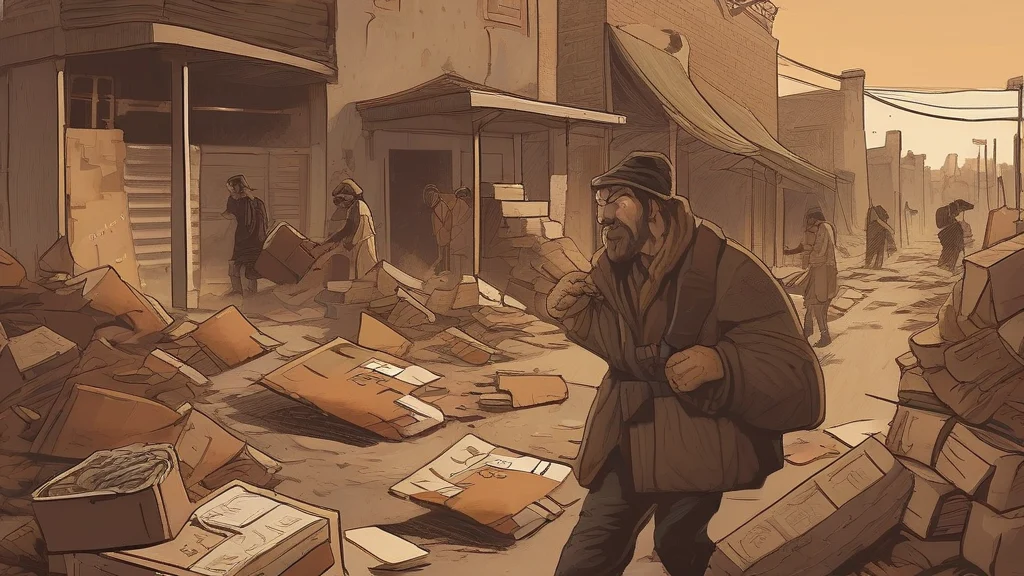
What does looting mean?
“Looting” is the act of taking goods or property by force, especially during a riot, war, natural disaster, or other period of disorder. It commonly refers to rapid, opportunistic theft from shops, homes, or damaged buildings, but it can also describe organized plunder by soldiers or armed groups. The word usually carries a strongly negative connotation and signals violence, insecurity, or the breakdown of social order. In the present participle, “looting” describes the people or actions involved: “The crowd continued looting despite police warnings.” As a noun, it is often modified by words such as “widespread,” “continued,” or “prevented.” The term is especially common in journalism and emergency coverage, where it distinguishes opportunistic theft from ordinary, individually motivated robbery.
The act of plundering or taking property by force, especially during conflict, riot, or other disorder.
"The police department increased patrols after reports of looting downtown."
Often used in the broader context of civil unrest, war, or emergency conditions.
Engaged in taking goods or property by force; plunder.
"Crowds looted stores after the evacuation order was lifted."
This is the present participle form, used to describe an ongoing or habitual action.
Plural “lootings” is used when referring to separate incidents of plunder.
"The report documented several lootings in the aftermath of the storm."
In a disaster zone, the first emergency response may be rescue, while the first warning sign of social breakdown can be widespread looting.
Reviewed by Deb Chak, Editor. AI-assisted content curated by RJS Tech Solutions LLP.
Where does looting come from?
The underlying English word “loot” was borrowed in the 17th century from Dutch “loot,” meaning plunder or booty, and ultimately derives from a Germanic word associated with war and booty. The present participle “looting” was formed from “loot” with the English suffix “-ing,” preserving the verb’s sense of taking property by force. Modern usage expanded beyond battlefield plunder to include theft during riots and disasters.
Related word forms
How looting is actually used
“Looting” is commonly used in news reporting and public discussion, especially in relation to riots, wars, natural disasters, and other emergencies. It often suggests opportunistic or indiscriminate theft, although the term can also describe organized plunder in a conflict zone.
Easily confused with looting
“Looting” means taking property by force, whereas “lounge” usually means sitting or spending time in a relaxed way.
“Looting” often refers to widespread or indiscriminate plundering during disorder, while “robbing” can describe a single act of theft or an armed theft.