
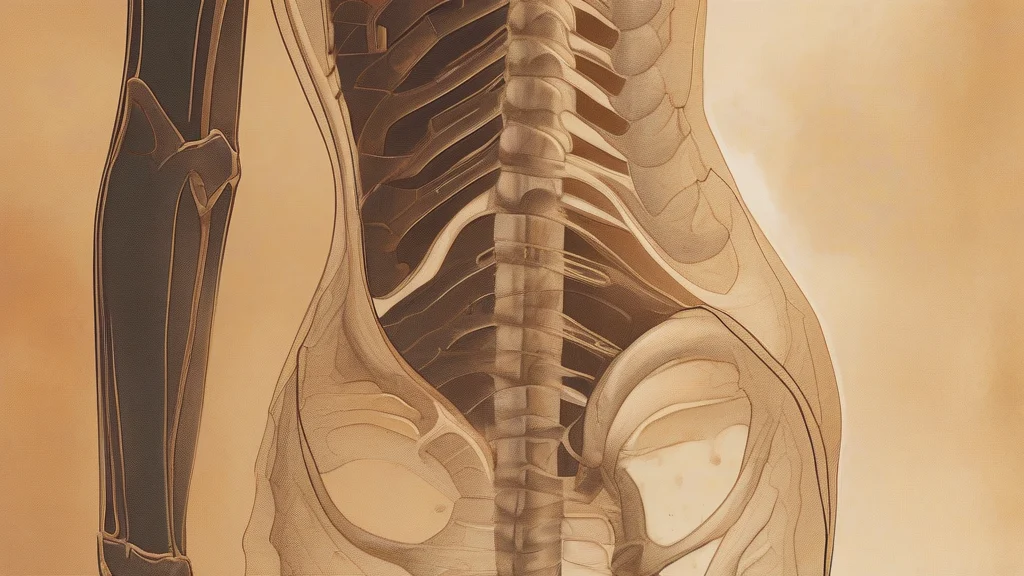
What does lordosis mean?
Lordosis is the inward curvature of the spine, especially in the lower back. The lumbar spine naturally curves inward to support the upper body, and the cervical spine similarly curves inward at the neck; this normal anatomy is described as lordosis. The term can also refer to excessive curvature, commonly called increased lordosis or swayback, which may be associated with pain, stiffness, or altered posture. It is frequently encountered in medical contexts such as physical examinations, imaging reports, and the description of spinal deformities. The opposite condition is kyphosis, an excessive outward curvature, usually affecting the thoracic spine. Although lordosis sounds unfamiliar, it names a feature of virtually every human spine and helps distinguish normal curvature from an abnormal increase in that curvature.
nounAn inward or forward curvature of the spine, especially in the lower back. Normal lordosis occurs in the cervical and lumbar regions of the spine, while excessive lordosis is a condition in which the curvature is more pronounced than usual.
- The natural inward curvature of the cervical and lumbar regions of the spine.
- Excessive inward curvature of the spine, especially in the lower back, sometimes called swayback.
"The radiographs showed increased lordosis of the lumbar spine."
"The clinician noted mild lordosis in the lower back."
"Pain and stiffness caused the patient to develop a pronounced lordotic posture."
The plural is lordoses. It is used when referring to multiple cases or instances of the condition or to distinct affected spinal regions.
"The scans revealed lordoses in both the cervical and lumbar regions."
Your lower back’s inward curve has a name—and for many people, it is perfectly normal.
Reviewed by Deb Chak, Editor. AI-assisted content curated by RJS Tech Solutions LLP.
Etymology of lordosis
The word comes from New Latin, derived from Greek lordōsis, a form associated with lordos, meaning “bent backward.” The Greek term was adopted into medical language to describe the spine’s backward-directed, inward curve. Its derivatives lordotic and lordotically later developed through the use of the root in describing posture, posture-related movement, and spinal curvature.
Related word forms
How lordosis is actually used
This is primarily a medical term. It may refer either to a normal anatomical curve or, with qualifiers such as “excessive” or “increased,” to an abnormal degree of curvature.
Easily confused with lordosis
Lordosis is an inward curvature of the spine, whereas kyphosis is an excessive outward curvature, typically in the thoracic region.