
What does luffa mean?
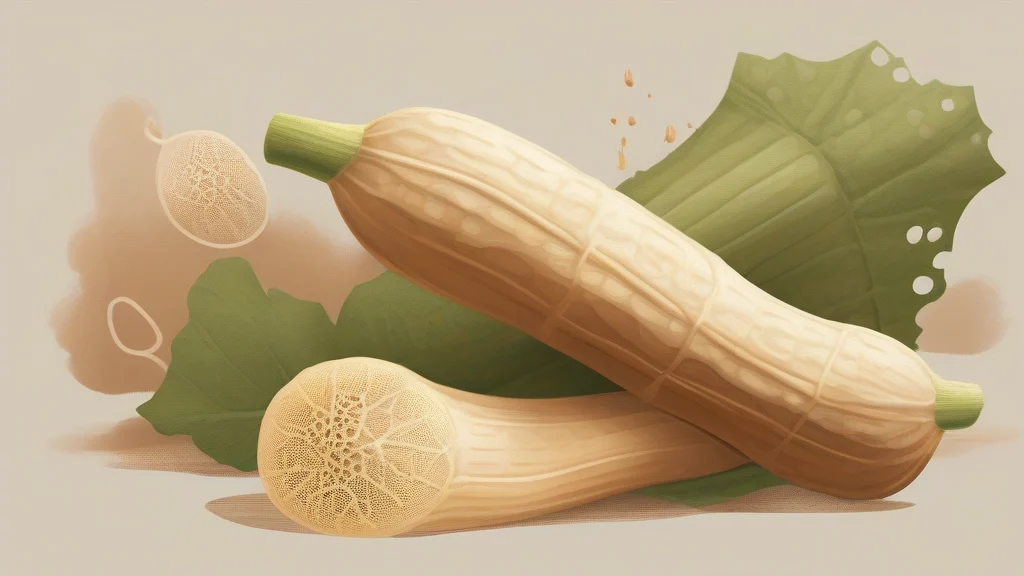
Luffa is the common name for a tropical climbing gourd in the cucumber family. The tender immature fruit is cooked as a vegetable in South and Southeast Asian cuisines, where it is often described as having a mild, slightly sweet flavor and a soft texture. As it matures, the fruit develops a fibrous network that can be cut into cubes or slices and used as a natural cleaning sponge. In British and South Asian English, luffa commonly refers to the culinary gourd, while loofah is especially common for the sponge. The word is also a useful example of how a single food can change both its form and its household function as it ripens. Luffa is notable among English loanwords because its history passes through Malay, Arabic, Persian, and Sanskrit. That history makes the familiar garden vegetable and bath sponge parts of the same word.
nounA tropical climbing gourd in the cucumber family, whose tender immature fruit is eaten as a vegetable. The mature fruit develops a fibrous interior that can be cut into pieces and used as a natural sponge.
- The tender immature fruit of a luffa plant, eaten as a vegetable.
- The mature fibrous fruit, or a piece cut from it, used as a natural sponge.
"She simmered the luffa with tomatoes and spices until the flesh was soft."
"Mature luffa is scrubbed clean and used as a natural sponge."
"In the curry, the chef added bite-sized pieces of luffa."
The regular plural is used when referring to multiple gourds, pieces of luffa, or sponges made from the plant.
"Several luffas were chopped for the stir-fry."
A luffa starts as a tender vegetable but can end life as a kitchen sponge.
Reviewed by Deb Chak, Editor. AI-assisted content curated by RJS Tech Solutions LLP.
Where does luffa come from?
English borrowed the word through the Malay form luffa, used for the sponge gourd. The Malay term reflects Arabic lūfā, which in turn came from Persian lūfa. These forms are ultimately connected with Sanskrit lumpá, an older name for the gourd.
How luffa is actually used
In culinary contexts, luffa normally denotes the immature fruit rather than the mature sponge. The term is especially familiar in South and Southeast Asian cooking, while loofah is widely used in North America and Australia for the fibrous sponge.
Easily confused with luffa
Loofah is a common spelling variant for the mature fibrous sponge, whereas luffa is also widely used for the immature fruit eaten as a vegetable.