
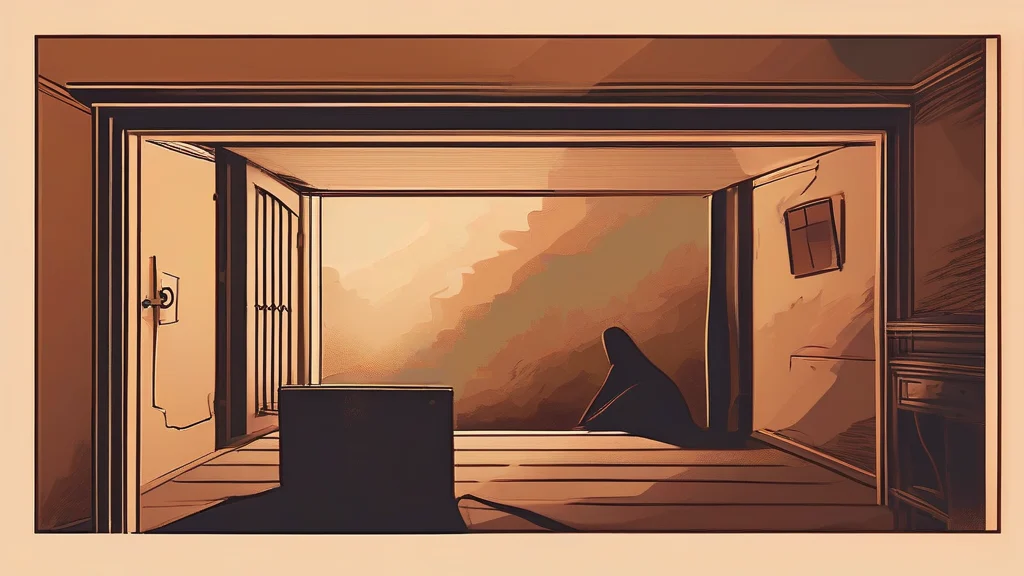
What does lurk mean?
“Lurk” means to remain hidden, concealed, or close by, often while waiting for something or avoiding notice. In its physical sense, a person or animal may lurk in shadows, behind a building, or near a place where something is likely to happen. The word often carries a faintly suspicious or threatening implication, as though the person is deliberately avoiding detection. It can also be used figuratively: a danger, threat, or serious problem may lurk in a plan or situation without being immediately obvious. Related forms include “lurker,” a person who hides or waits, and “lurking,” which describes someone or something that is concealed or potentially present. Although “lurk” is sometimes close in meaning to “hide,” it generally suggests remaining nearby or waiting in a concealed way rather than simply concealing an object for a short time. It is also used in expressions such as “a lurking threat” and “lurking in the shadows.”
verbTo remain hidden, concealed, or close by, especially while waiting or avoiding notice. It can also refer to a danger, problem, or possibility that is present but not immediately apparent.
- To remain hidden, concealed, or close by, especially in order to avoid notice.
- To wait or move about in a stealthy, suspicious, or furtive manner.
- To be present as a latent danger, problem, possibility, or quality that has not yet become openly apparent.
"A suspicious figure lurked near the entrance after midnight."
"The cat lurked beneath the bushes, waiting for the birds to return."
"The report warned that serious risks were lurking beneath the surface of the proposal."
A danger can lurk without being seen, and a person can lurk without making a sound.
Reviewed by Deb Chak, Editor. AI-assisted content curated by RJS Tech Solutions LLP.
Where does lurk come from?
The exact origin of the word is uncertain. It was already established in English by the Middle English period in the sense of remaining hidden or waiting in concealment. Its precise historical source and any close cognates cannot be stated with confidence, so a direct derivation should not be assumed.
Related word forms
How lurk is actually used
The word is common in both British and American English. It usually suggests concealment, suspicious waiting, or an unseen presence, and it can be used figuratively for latent dangers or problems.
Easily confused with lurk
“Lurk” means to stay hidden or remain close by, whereas “stakeout” more specifically means to watch a place or person, often for investigative purposes.